

A Brief By David Goldman
___________________________
Isaiahs Afwerki, the long-serving Eritrean President arrived in Nairobi, the capital of the Republic of Kenya today for a 2-day official visit. This follows the December 2022 meeting between the President of Kenya Dr. William Ruto and the Eritrean leader. The visit, a direct invitation by President Ruto is in line with Nairobi’s foreign policy and geopolitical interests.
The Eritrean partisan became the President of Eritrea after he led the Eritrean People’s Liberation Front (E- PLF) to victory against Ethiopia in May 1991 after a 30-year-old war for independence. His leadership skills were horned when he was sent to China by the Eritrean Liberation Front for political commissar training in the 1960. He mastered the Maoi’st doctrine and subsequently refined and internalized it.
Eritrea is only known from one facet (one-dimensional narrative of Asmara’s relentless repression) since its secretive Government thrives under op-Sec. Eritrea is regarded as difficult to deal with by the international community but that is perception.
Though Eritrea entered into violent conflicts with all of its neighbors, it has managed to maintain diplomatic and political influence in the wider Horn of Africa region besides several attempts to normalize relations with the U.S during the Barack Obama regime.
Eritrea suspended its membership in IGAD in 2006 as a reaction to the Ethiopian intervention in Somalia. Subsequently, Asmara has played a key role in the Tigray war in Ethiopia where its soldiers military supported the Ethiopian military against the TDF. Its IGAD readmission request is still pending. Perhaps the Nairobi visit could be a prelude to such a process.
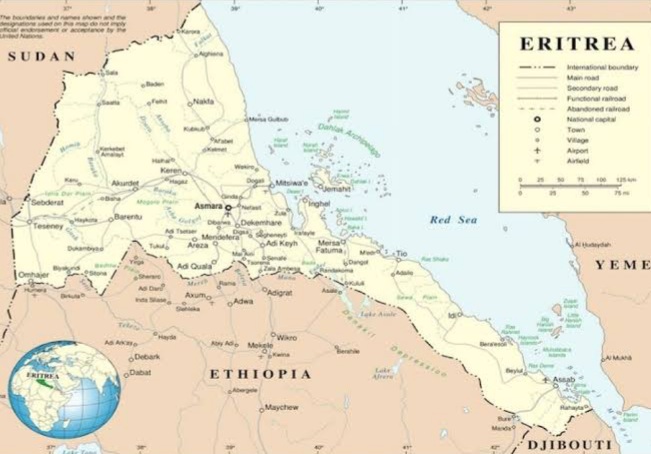
Eritrea’s wider geopolitical position in the Horn is unique, and thus, a clever East African regime can exploit that and turn Asmara into a constructive partner and viable economy. It has a huge potential if paired with Ethiopia and Sudan. Eritrea actively engaged in the Khartoum process, a regional initiative aimed at curbing human trafficking, in itself a significant shift in Asmara’s foreign policy stance. Asmara also allowed over 3000 Somali soldiers to go back home and help GOS fight the Somali terror group Al-Shabāab al-Mujāhideen. Such sphere of influence when exploited and properly tapped can have immense benefits to regional bilateral and economic systems.
Saudi Arabia and the United Arab Emirates, both who are Kenya’s strategic partners have been strengthening their security and economic ties with Asmara. Kenya will certainly find Eritrea as a big ally in the Red Sea trade and with a stable Somalia and Ethiopia being partners with Eritrea, the economic and security benefits will be significant.
Ethiopia-Eritrea relations have significantly improved under Prime Minister Abiy Ahmed. Addis hopes to exploit the vast border with Eritrea and also, Eritrea’s 1,151 kilometers long Red Sea coastline, one of the world’s busiest shipping routes. The restoring of ties with Ethiopia could lead to improved relations with the international community, and even to the lifting of sanctions imposed by the United Nations in 2009 for Eritrea’s alleged support for Al-Qaeda-linked Al-Shabaab in Somalia. On the other hand, Ethiopia shares an 861 kilometres border with the Republic of Kenya. Cross-border cooperation between the 2 countries has seen increase in trade volumes. The trickle down effect of these cross-border trade will have immense economic value and when taken further to the Red Sea, they’ll be massive.


