

In Mozambique, July 2024 saw a surge in Islamic State Mozambique (ISM) militant activities, with significant armed assaults on civilians and specific targeting of Christians. On July 23rd and 25th, ISM militants attacked fishermen in Calugo Village in Mocimboa da Praia and later assaulted Nkona Village in Nangade district. Earlier in the month, on July 6th and 10th, ISM captured and executed Christians in Mbau and Mitope villages, and also deployed an IED targeting Christians in Muidumbe district. Additionally, on July 21st, ISM released a photoset depicting their followers in multiple areas within Macomia, signaling their ongoing influence and presence.
Civil unrest also marked the month in Mozambique. On July 9th, a riot erupted in Macomia following the shooting of a local market trader by a soldier for violating curfew. This incident escalated tensions between the local population and the Mozambican Defense and Security Forces (FDS), resulting in at least two soldiers’ deaths. The unrest reflected deep-seated grievances against the FDS, which had been accused of extortion and arbitrary detentions in the area.
In the Democratic Republic of Congo (DRC), Islamic State Central Africa Province (ISCAP) militants intensified their operations, launching a series of deadly assaults against Christian populations and Congolese military forces, particularly in North Kivu and Ituri provinces. Between July 20th and 30th, ISCAP militants carried out multiple attacks in Bandulu, Lubero, and Mabina, leading to numerous casualties. The militants also clashed with Congolese and Ugandan troops in Ituri province, underscoring the persistent threat posed by ISCAP in the region.
In Somalia, the Islamic State (IS) continued to assert its presence, particularly in the semi-autonomous region of Puntland. Despite being targeted by US airstrikes in May, the group has been resilient, launching attacks on security forces and businesses while competing with al-Shabaab for territorial control. IS-Somalia has expanded its influence in the Buuraha Cali Miskat mountain range and surrounding areas, leveraging local clan support for recruitment and operational control. The group has also been involved in extorting businesses to finance its activities, further destabilizing the region.
Meanwhile, Tanzania is grappling with the resurgence of Salafi madrasas, which have historically been sites of radicalization. The government has been integrating these institutions under the National Muslim Council of Tanzania (Bakwata) to mitigate the risks, but unregulated madrasas still pose significant challenges. This situation has implications for regional stability, particularly concerning the neighboring insurgency in Mozambique.
Mozambique
- 23rd July– ISM militants conducted an armed assault on fishermen in Calugo Village in Mocimboa da Praia.
- 25th July– ISM terrorists conducted an assault on Nkona Village in Nangade district.
- 21st July– ISM released a photoset depicting the followers in Manica, Olumboa and Darumba areas in Macomia.
- 10th July– – ISM militants captured and executed a Christian in Mbau region in MDP.
- 6th July– ISM militants captured and executed a Christian near Mitope village in MDP.
- 8th July– ISM militants targeted Christians with an IED near Dimayo village in Muidumbe district in Cabo Delgado.

The Democratic Republic of Congo
- 29th July– ISCAP militants clashed with Congolese and Ugandan troops in Mukasili in Ituri province.
- 30th July– ISCAP terrorists attacked Christian population in Mabina villahe, Lubero region In North Kivu.
- 29th July– Militants led an armed assault on Christians in Bandulu, Lubero region, North Kivu.
- 28TH July– Militants led an armed assault on Christians in Bandulu, Lubero region, North Kivu.
- 27th July– Militants led an armed assault on Christians in Bandulu, Lubero region, North Kivu.
- 27th July– ISCAP militants conducted an armed assault on Congolese militia forces in Bandulu, Lubero region
- 27th July– militants led an armed assault on Christians in Mabunda, Lubero Region, North-Kivu.
- 24th July– Militants attacked civilians in Magombo, Muya, and Nzakia in Beni region.
- 24th July– several Christians were captured and killed in Ombole in Lubero region, North Kivu.
- 24th July– Several civilians were injured following an ISCAP attack in Ndalya in Ituri Province.
- 23rd July– ISCAP rebels attacked civilians near Mamove area in North Kivu.
- 23rd July– several people were injured after an ISCAP attack im Biomanyama area in Ituri province.
- 22nd July– ISCAP militants led an armed assault on Christians and Congolese Militia Forces in Ombole, Lubero Region.
- 21st July– intelligence reported clashes between ISCAP and Congolese-Ugandan troops in Mohoyo area in Ituri.
- 22nd July– 6 Christians were captured and executed by ISCAP militants on RN4 near Ndalya in Ituri.
- 20th July– 2 Christians were captured and executed by ISCAP militants on RN4 near Ndalya in Ituri.
- 20th July– at least one person a Congolese soldier were assassinated by ISCAP militants near Mahala in Ituri province.
- 18th-19th – dozens were killed or injured in a coordinated attack by ISCAP terrorists in Mambia, Lubero region.
- 16th July– militants captured and executed a christian on the RN4 Between Ndimo and Idohu, Ituri.
- 16th July– Several civilians were injured in an armed assault in Idohu, Ituri province.
- 17th July– Several civilians were injured in an armed assault in Mambia, Lubero.
- 15th July– Several civilians were injured in an armed assault in Kyanganda area in Lubero Region.
- 14th July– militants led an armed assault on Congolese Military Forces and Christians in Ndjiapanda, Lubero Region.
- 11th July– militants clashed with Congolese Military in Biambe, Lubero Region.
- 11th July– ISCAP detonated an IED against Congolese militia and Congolese troops in Musenge, Lubero region.
- 8th July– ISCAP detonated an IED targeting UN peacekeepers’ base in Beni.
- 8th July– Congolese militia forces were attacked in Bangiyo village, Lubero village.
- 6th July– ISCAP militants attacked civilians in Mukondi in North Kivu.
- 3rd July– militants led an armed assault on Congolese Militia, Army Forces, and Civilians.
SUMARRY AND INSIGHTS
SOMALIA
Since May, the Islamic State (IS) in Somalia has ramped up its activity, particularly in the semi-autonomous region of Puntland. Following US airstrikes targeting IS positions and their leader, Abdulqadir Mumin, the group has launched several attacks on security forces and businesses, clashing with al-Shabaab for control of strategic areas.
In late May, the US, in coordination with the Somali National Army, conducted airstrikes targeting IS positions in Puntland. One of these airstrikes near Dhadar village aimed at Mumin, killed three militants, including a commander. US officials believe that IS is growing stronger in Somalia, with some speculating that Mumin could be the global head of IS.
IS forces, numbering between 100 and 400 fighters, primarily operate in northeastern Puntland. Although their activity in 2024 has been limited, IS has expanded its control in the Buuraha Cali Miskat mountain range and increased its influence in Bosaso and surrounding areas. This expansion is facilitated by local clan support, which aids in recruitment and control.
To finance its operations, IS has been extorting businesses for “taxes,” threatening those who refuse with targeted violence, including hand grenade attacks. The increased demands have led to the closure of businesses, including hospitals and trading companies, further destabilizing the region.
The US has sharpened its counterterrorism focus on Somalia, concerned about IS-Somalia’s potential role in the global IS network. Reports suggest that top IS leaders, possibly including the caliph, have traveled to Somalia, viewing it as a strategic expansion area. However, some analysts are skeptical about the feasibility and strategic value of such a move.
Despite its small size, IS-Somalia plays a crucial role in the group’s global logistics and financing, particularly through the al-Karrar office. This office supports IS operations in various regions, including Afghanistan, by moving funds and resources. This strategic importance could elevate the role of IS-Somalia’s leader, Mumin, in the broader IS strategy.
TANZANIA
Tanzania is seeing a resurgence of Salafi madrasas, promoted by the state to integrate them under the National Muslim Council of Tanzania (Bakwata). While this mainstreaming approach has been successful historically, unregulated madrasas have previously been sites of radicalization and martial training. Recent discoveries of children living in makeshift accommodations in mosques have highlighted this issue.
One mosque, Masjid Salaf, is linked to the Ibn Taymiyyah Salaf Foundation and its leader, Sheikh Qassim Mafuta, who has connections to al-Shabaab but now preaches against violent jihadism. Tanzania’s strategy of appeasement has kept Islamist violence low but carries risks for child welfare and potential radicalization, impacting neighboring countries like Mozambique. This approach is expected to continue through 2030 under President Samia.
Insights
- State-Encouraged Integration: Tanzania’s approach of integrating Salafi madrasas under Bakwata showcases a strategic attempt to regulate and mainstream these institutions, aiming to mitigate radicalization risks by bringing them under official oversight.
- Historical Success and Current Risks: While Tanzania’s historical policy of appeasement towards groups renouncing violent jihadism has kept Islamist violence low, unregulated madrasas still pose significant risks for radicalization and child welfare.
- Nuanced Government Response: The recent actions by District Commissioner Peter Magoti highlight a dual strategy: addressing immediate security and child welfare concerns while simultaneously supporting the infrastructure of these religious institutions, possibly to ensure better future regulation and oversight.
- Regional Implications: The presence of children from regions bordering Mozambique and from neighboring countries underscores the potential cross-border implications of Tanzania’s policies, necessitating heightened sensitivity to avoid fueling conflicts in adjacent regions.
- Continued Strategy: Given the low levels of Islamist political violence and the success of the appeasement policy, Tanzania is likely to maintain this strategy, which could shape the country’s approach to managing radicalization through the remainder of this decade and beyond.
MOZAMBIQUE
July was marked by an unprecedented riot against Mozambican Defense and Security Forces (FDS) in Macomia on 9 July. The riot resulted in the deaths of at least two soldiers, with some reports indicating five deaths, and left two more soldiers badly injured. The violence erupted after a soldier killed a market trader who was walking outside after curfew the previous evening. Demonstrations against the FDS included calls for their complete withdrawal from Macomia. Shops and businesses were closed, and traffic was suspended on the road between Macomia and Pemba. Security forces attempted to disperse the crowd with live fire, causing people to flee into the woods.
This riot highlighted longstanding tensions between the FDS and the local population. In June, the police Rapid Intervention Unit was accused of extorting and arbitrarily detaining civilians in Macomia’s Nanga A neighborhood, where many demonstrators initially gathered following the market trader’s shooting.
The SAMIM officially concluded its mission in Cabo Delgado province on 15 July, with Defense Minister Cristóvão Chume acknowledging ongoing insurgent attacks and persistent insecurity. The SAMIM handed over various captured weapons to the Mozambican government. Despite SAMIM’s departure, Tanzania will maintain a 300-strong force in Nangade district to prevent insurgent movements.
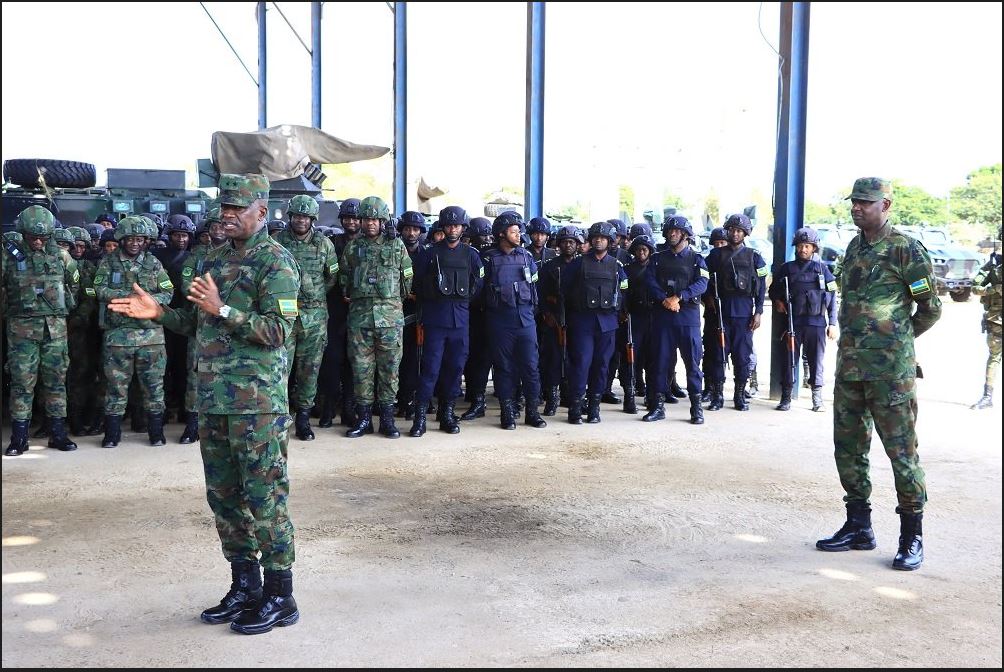
As the last batch of Southern African Development Community Mission in Mozambique (SAMIM) forces leaves Mozambique, a new contingent of the Rwanda Defense Force (RDF) is preparing to take their place. An advance party of the RDF has been sent to manage logistics in Macomia district, the area most affected by the insurgency. The RDF is setting up its base, water sources, and power line, and they are not expected to occupy the Xinavane base built by the South African National Defense Force (SANDF) in 2021.
The RDF will face numerous challenges, as insurgents remain concentrated along the coast between Mucojo and Quiterajo, and in the dense forests of Katupa. The RDF will also need to repair relations with the local community, which has suffered brutal treatment from the FDS. Recent actions by the RDF in Mocímboa da Praia, such as moving street vendors, have provoked resentment, and the RDF will need to tread lightly to avoid civil unrest.
Internationally, France has expressed readiness to strengthen security cooperation with Mozambique. However, the EU remains divided on funding Rwanda’s military intervention, with some countries skeptical. Mozambique’s magistrates’ association highlighted a high acquittal rate of suspected insurgents due to lack of evidence, pointing to the challenges in prosecuting terrorism cases.
IS continues its recruitment activities in Macomia district, while a report from Save The Children revealed forced marriages and sexual abuse of girls by armed groups in Cabo Delgado. Economic vulnerability and the conflict are driving these issues, with some families sending their daughters to marry men from armed groups for protection or money to flee the conflict area.
DRC
ISCAP (Islamic State Central Africa Province) militants were highly active in July. On July 29th, they clashed with Congolese and Ugandan troops in Mukasili, Ituri province, and attacked Christian populations in Bandulu and Mabina villages in North Kivu. From July 27th to 29th, ISCAP conducted multiple armed assaults on Christians and Congolese militia forces in Bandulu. Other significant incidents included attacks on civilians in Magombo, Muya, and Nzakia on July 24th, and in Ombole and Mamove areas on July 22nd. Continuous violence was observed, with armed assaults, executions, and clashes with military forces occurring almost daily. On July 8th, ISCAP detonated an IED targeting a UN peacekeepers’ base in Beni. The region has seen relentless violence, with significant incidents occurring throughout the month, highlighting the persistent insecurity and the challenges faced by local and international forces in countering ISCAP’s influence.
July 2024 was marked by significant terrorist activities and civil unrest in East and Central Africa, with Islamic State affiliates intensifying their operations across Mozambique, the DRC, and Somalia. Mozambique experienced a notable increase in ISM attacks on civilians, particularly Christians, as well as civil unrest stemming from tensions between the local population and security forces. In the DRC, ISCAP’s continued assaults on Christian communities and clashes with military forces highlighted the group’s persistent threat. Somalia’s IS faction remained resilient despite targeted airstrikes, expanding its influence in Puntland and financing its operations through extortion.
Tanzania’s efforts to regulate Salafi madrasas highlight the delicate balance between mitigating radicalization risks and maintaining regional stability. The cross-border implications of Tanzania’s policies underscore the interconnected nature of security challenges in the region. As insurgent activities continue to destabilize East and Central Africa, regional and international cooperation will be crucial in addressing the evolving


