

March 2026 reflected a sustained, multi-theatre Islamic State insurgent footprint across Mozambique, the Democratic Republic of Congo, and Somalia, defined by adaptive dispersion, economic coercion, and episodic violence rather than territorial control.
In Mozambique, Islamic State Mozambique (ISM) maintained operational mobility across Cabo Delgado, with repeated extortion of artisanal mining sites, targeted civilian violence, and limited engagements with FADM. Activity patterns confirm a continued shift toward revenue generation through informal gold economies, combined with intimidation of rural populations and intermittent force concentration in mining corridors, without progression toward urban seizure.
In DRC, Islamic State Central Africa Province (ISCAP) remained the most operationally aggressive affiliate, executing coordinated attacks against civilians, security forces, and mining infrastructure in Ituri. Mid-month escalation, including mass abductions and strikes on a Chinese-operated site, was followed by fragmentation under joint FARDC-UPDF pressure, indicating a cyclical pattern of offensive bursts and rapid dispersal into forested operating zones.
In Somalia, Islamic State Somalia (ISS) remained heavily constrained within the Cal Miskaad mountains. Activity was largely limited to isolated IED attacks, propaganda dissemination, and survival-based movement under sustained Puntland and US AFRICOM pressure, reflecting a degraded but persistent insurgent presence.
Across all theatres, Islamic State affiliates demonstrated consistent reliance on decentralized cell structures, exploitation of remote terrain, and engagement with illicit economic networks, particularly mining, while avoiding sustained conventional confrontation.
MOZAMBIQUE
- 31st March- a group of up to 30 ISM militants attacked a group of fishers at Nguri Lake in Muidumbe district.
- 31st March- The same ISM group appeared at the Ravia mines southwest of Meluco, continuing extortion of artisanal miners for cash and gold before subsequently moving northward.
- 30th March- A large group of likely ISM militants, at least 100 strong, visited the Matandane mine in Minhanha (north of Meluco), where they extorted artisanal miners and threatened a possible attack on Macomia town.
- 26th March- ISM terrorists stopped a vehicle near Litingina, along the main road 18km south of Nangade town, and extorted money from passengers.
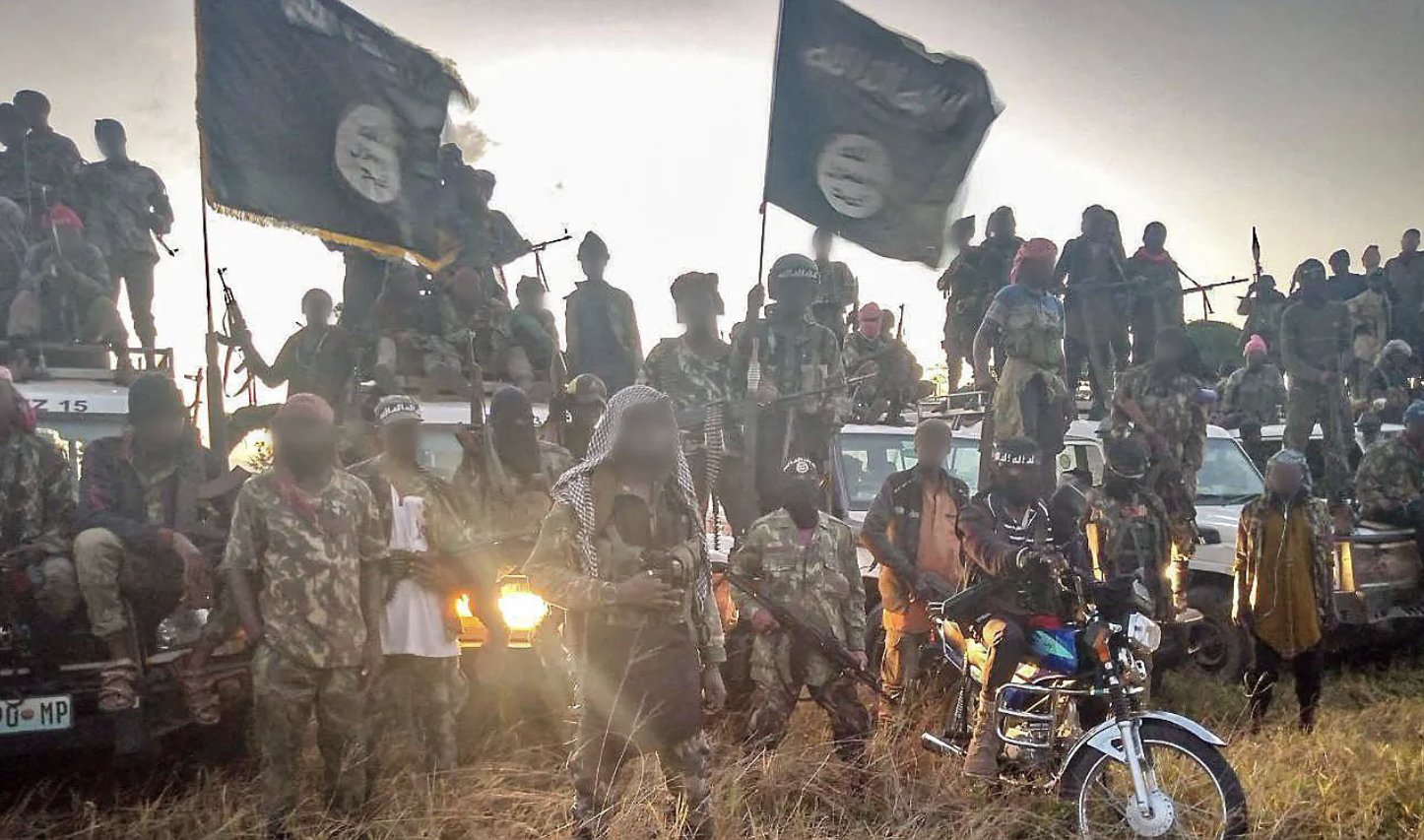
- 24th March- Islamic State Mozambique (ISM) circulated Eid al-Fitr Photoset online that showcases the activities and numbers.
- 20th March- ISM militants celebrated Eid al-Fitr in Ulo village, just 12 kilometers from Mocímboa da Praia town.
- 20th March- Heavy gunfire was reported near Catupa forest in Quinto Congresso, indicating clashes between ISM and FADM as forces attempted to dislodge ISM positions.
- 5th March- ISM fighters approached the Muaja artisanal gold mine in the Ancuabe district, causing miners to flee, consistent with a pattern of targeting artisanal mining sites.
- 05th March- ISM claimed responsibility for the execution-style killings of civilians (two Christians abducted earlier in February) in Macomia district.
D.R. CONGO
- 28th March- Islamic State Central Africa (ISCAP) militants led an armed assault against Christians in the Basiri area in Ituri Province.
- 27th March- ISCAP terrorists attacked Congolese militia forces in Lumalisa in Ituri province.
- 25th March- Several soldiers were killed or injured following an armed attack by ISCAP terrorists on the forces’ positions between Komabda and Mambasa in Ituri.
- 17th March- several people were injured when ISCAP rebels attacked Christians in Basidio, near Komanda in Ituri.
- 15th March- ISCAP led an armed assault on Congolese army forces in Bandjidido near Komanda in Ituri.
- 14th March- ISCAP and Congolese military forces clashed in Mushasha in Ituri Province.
- 12th March- ISCAP militants led an armed assault on civilians, kidnapping over 100, in Mushasha, Near Komanda, Ituri Province.
- 12th March- ISM militants carried out an armed attack on Congolese soldiers and civilians at a Chinese-operated mine in Mushasha, near Komanda in Ituri Province.
- 11th March- ICAP militants engaged in clashes with Congolese militia forces in Lolwa, Ituri.
- 11TH March- ISCAP militants captured and beheaded two Congolese militiamen in the Lolwa area in Ituri.
- 10th March- ISCAP militants captured and beheaded two Christians in Mayuano in Ituri.
- 10th March- Joint Congolese-Ugandan pressure led to the temporary disruption of an ISCAP command/logistics camp in the Mambasa sector, assessed as part of a broader counterinsurgency sweep.
- 2nd March- ISCAP released a propaganda video titled ‘Guidance and Admonition for the Righteous’ as a guide for its followers during Ramadhan.
SOMALIA
- 11TH March– Islamic State Somalia (ISS) released a propaganda video titled “The Rights of the Faith-Based Brotherhood,” aimed at reinforcing group cohesion and ideological messaging, likely intended to boost morale and recruitment while projecting organizational legitimacy.
- 13th March– ISS militants targeted Puntland Defense forces’ vehicle with an IED in the Mirale Valley in the Bari region of Puntland.
- 11TH March– US Africa Command (AFRICOM) conducted an airstrike targeting ISIS fighters in Puntland, in the Bari region southeast of Bosaso.
- 16th March– another US-Somalia coordinated airstrike targeted ISIS positions in the Cal Miskaad mountains about 45 km southeast of Bosaso.
- 04th March- ISS Militants carried out an IED attack against Puntland Defense Forces in Dhasaan, in the Jalil Valley of the Bari region.

ANALYSIS AND INSIGHTS
Mozambique
The security climate in Mozambique’s northern theatre during March remained highly volatile, with Islamic State Mozambique (ISM) sustaining operational momentum through a combination of targeted violence, coercive economic activity, and psychological operations designed to project influence across Cabo Delgado’s inland corridors, coastal zones, and artisanal mining networks. The month reflected a clear pattern of dispersed but coordinated insurgent mobility, with ISM maintaining pressure on both civilian populations and state security forces while exploiting gaps in rural governance and maritime control.
ISM activity during the reporting period demonstrated sustained freedom of movement across Muidumbe, Macomia, Meluco, Nangade, Ancuabe, and Mocímboa da Praia districts. The 31 March attacks in Muidumbe against fishers at Nguri Lake and subsequent extortion activity at Ravia mines underscored the group’s continued dual strategy of violence and resource extraction. The shift from direct large-scale confrontation to smaller, opportunistic engagements with civilians and artisanal miners reflects a tactical adaptation aimed at revenue generation and territorial signaling rather than immediate territorial consolidation.
The presence of a larger ISM formation, assessed at approximately 100 fighters in the Minhanha area on 30 March, suggests episodic force concentration capabilities remain intact. Their ability to move through mining corridors north of Meluco and issue threats against Macomia town indicates continued reconnaissance of urban pressure points, although there was no confirmed conventional assault during the period. This reinforces the assessment that ISM retains the capacity for escalation but is currently prioritizing coercive control of economic nodes over direct urban seizure attempts.
Mining sites and resource extraction zones continued to be central to ISM operations. Repeated extortion incidents at Matandane, Ravia, and Muaja mines highlight a sustained insurgent financial model reliant on artisanal gold production networks. This mirrors broader patterns observed since late 2025, where insurgents increasingly embed within informal economies, extracting rents while avoiding prolonged engagements with well-defended positions. The displacement of miners following ISM presence further disrupts local livelihoods and indirectly strengthens insurgent leverage over remote populations.
Coastal dynamics remained particularly sensitive during March. ISM movement along the Macomia and Mocímboa da Praia coastline continued to intersect with intensified Mozambican Armed Defense Forces (FADM) naval operations enforcing restricted maritime zones. The reported “no-sail” enforcement posture and the incident involving fire directed at a fishing vessel near Luchete reflect a highly securitized maritime environment where distinguishing between insurgent logistics and civilian activity remains problematic. The killing of fishers earlier in the month continues to generate local resentment and risks deepening civil-military mistrust in coastal communities reliant on marine transport and fishing economies.
Ground engagements between ISM and FADM were limited but persistent, with reported heavy gunfire near Catupa forest in Quinto Congresso on 20 March indicating ongoing contestation of inland forested corridors. These engagements suggest that while ISM avoids prolonged set-piece battles, it retains sufficient combat capability to resist displacement operations and maintain pressure on security deployments.
On the counterinsurgency front, FADM operations remained heavily reliant on maritime containment and area denial strategies, particularly along the Macomia coast and Messalo River corridor. However, these measures continue to face structural limitations due to the geography of mangrove systems and the reliance of local populations on coastal movement. The partial withdrawal from aggressive maritime interdiction following civilian casualties suggests operational recalibration, but also exposes the fragility of state legitimacy in contested littoral zones. Humanitarian and reconstruction efforts provided a limited stabilizing influence but remain constrained by funding shortfalls and access limitations. The AfDB-backed recovery initiative and UN humanitarian appeal signal continued international commitment, yet both face implementation challenges in areas where security remains fluid and administrative control is partial or contested. These gaps continue to create exploitable conditions for ISM recruitment and logistical embedding.
International security support structures remained central to the overall stability of Cabo Delgado. Rwanda’s continued deployment of over 6,000 personnel remains a decisive factor in holding key population centres and securing strategic infrastructure linked to liquefied natural gas developments. However, public signaling from Kigali regarding possible withdrawal highlights underlying financial and geopolitical tensions that could, if unresolved, introduce medium-term uncertainty into the security architecture. Despite this, an immediate drawdown remains unlikely given strategic investments and regional security dependencies.
Overall, the security climate in Mozambique during March reflects a persistent low-intensity insurgency with episodic spikes of coordinated activity, sustained economic predation in rural mining and transport corridors, and fragile but ongoing counterinsurgency containment. ISM remains operationally adaptive rather than expansionist, relying on mobility, intimidation, and resource extraction rather than territorial governance. State forces, supported by regional partners, retain control over key urban centres and strategic infrastructure, but continue to face significant challenges in securing rural peripheries, coastal mobility routes, and community trust in contested districts.
D.R. CONGO
The security situation in eastern Democratic Republic of Congo during March remained characterized by sustained insurgent volatility, with ISCAP demonstrating a high degree of operational adaptability across Ituri and North Kivu provinces. The period was marked by a hybrid insurgency pattern combining dispersed forest mobility, targeted mass-casualty violence, and an expanding focus on economic infrastructure, particularly mining assets and rural extraction corridors. Operationally, ISCAP maintained persistent activity across the Lubero, Mambasa, and wider Ituri-North Kivu forest belt. During the early March period, the group continued to exploit dense terrain and limited state visibility to sustain small-unit movement while avoiding decisive engagement with FARDC and UPDF joint patrols. This reflects a continued preference for operational dispersion following repeated counterinsurgency pressure, rather than fixed territorial control or conventional confrontation.
The mid-month period marked a significant escalation in ISCAP activity, when the group executed a coordinated offensive cycle in the Mushasha and Komanda axis in Ituri Province. The assault on a Chinese-operated mining site represented a notable strategic development, signaling ISCAP’s increasing emphasis on economic warfare and its willingness to directly target foreign-linked infrastructure. The attack, which included the overrunning of mining facilities, destruction of assets, and simultaneous engagement of Congolese forces, indicates improved coordination and a capability to extend operational reach beyond established containment zones. This offensive phase was accompanied by large-scale civilian targeting, including mass abductions reportedly exceeding 100 individuals and the burning of village infrastructure in the Mushasha area. These actions underscore ISCAP’s continued reliance on population coercion as a central pillar of its operational model. The abduction of civilians, combined with execution-style killings reported in Lolwa and Mayuano, reinforces the group’s use of terror as both a control mechanism and recruitment tool.
Following the mid-month surge, ISCAP transitioned into a lower-visibility operational posture during the latter half of March. This phase was characterized by fragmentation into smaller autonomous cells, reduced engagement frequency, and continued reliance on intimidation, extortion, and mobility through forest corridors. The shift suggests a deliberate post-offensive dispersion strategy designed to mitigate exposure to intensified FARDC and UPDF counter-operations following joint pressure in early March. Despite the temporary disruption of a logistics node in the Mambasa sector as a result of coordinated Congolese–Ugandan operations, ISCAP demonstrated resilience through rapid reconstitution of dispersed support structures. The inability of state forces to decisively dismantle these networks highlights the enduring challenge posed by terrain complexity, localized intelligence gaps, and the group’s embeddedness within remote rural economies.
Geographically, ISCAP activity remained concentrated along a widening arc in Ituri Province, extending from Mambasa through Komanda and into deeper interior zones, while maintaining secondary movement corridors into North Kivu’s Lubero sector. The expansion of operational reach beyond traditional strongholds signals both improved mobility and a possible strategic intent to stretch security force resources across multiple fronts. Economically, March reinforced the group’s increasing focus on mining infrastructure as a primary target set. The assault on the Chinese-operated site, alongside repeated incursions into informal extraction zones, demonstrates a clear shift toward economic disruption as a core insurgent strategy. This trend not only generates material gain but also undermines state-aligned and foreign-backed economic activity, thereby weakening long-term stabilization prospects in eastern Congo.
From a strategic perspective, ISCAP’s March activity reflects a hybrid insurgency model that blends territorial avoidance with episodic mass violence and sustained economic predation. The group is no longer primarily operating as a static rural insurgency but increasingly as a mobile, decentralized network capable of synchronized strikes across multiple districts. This evolution suggests continued organizational resilience despite sustained counterterrorism pressure.
The overall security climate in eastern DRC during March remained highly unstable. FARDC and UPDF joint operations maintained pressure on insurgent networks but were unable to prevent periodic mass-casualty incidents or fully disrupt ISCAP’s dispersed operational architecture. Terrain advantages, limited state penetration in rural zones, and the adaptability of insurgent cells continue to constrain counterinsurgency effectiveness. Civilian populations bore the brunt of insecurity, particularly in Ituri Province, where repeated attacks on villages, religious communities, and transit routes contributed to sustained displacement pressures. The pattern of abductions, targeted killings, and infrastructure destruction indicates that ISCAP retains both intent and capability to project violence into vulnerable civilian spaces with limited warning.
Overall, March reflects a security environment in eastern DRC defined by adaptive insurgent persistence rather than territorial expansion. ISCAP demonstrated both tactical flexibility and strategic ambition, particularly through its mid-month offensive against mining infrastructure, while simultaneously reverting to dispersed survival mode under military pressure. The result is a fragmented but enduring threat landscape, where state and partner forces retain tactical initiative in some areas but continue to face structural limitations in achieving lasting disruption of insurgent mobility and economic networks.
SOMALIA
The security environment in northern Somalia during March remained defined by sustained but constrained activity by Islamic State Somalia (ISS) within the Cal Miskaad mountain range in Puntland. The group continued to operate as a fragmented insurgent network anchored in rugged terrain, relying on small-cell mobility, cave-based concealment, and limited offensive actions in response to persistent Puntland Defense Forces pressure and intensified international air support.
Throughout the month, ISS maintained a dispersed presence across the Bari region, particularly in remote mountain corridors southeast of Bosaso. Operational reporting indicates that the group’s freedom of movement remained significantly degraded following sustained Puntland search and clear operations, reinforced by United States Africa Command airstrikes. These combined pressures have increasingly pushed ISS into a defensive survival posture characterized by concealment, avoidance of confrontation, and reliance on highly mobile micro-units operating within isolated valleys and cave systems.
Early March activity reflected logistical strain within ISSP networks, with disrupted supply lines into the Cal Miskaad mountain enclaves and reduced external support routes, resulting in a lower operational tempo and no confirmed large-scale attacks, as activity remained focused on survival, concealment, and maintaining presence in inaccessible terrain while avoiding Puntland and allied surveillance. Mid-March saw intensified external pressure following United States Africa Command airstrikes on 11 and 16 March alongside continued Puntland ground operations, which further restricted ISSP mobility and reinforced containment around known hideouts, prompting dispersal into smaller autonomous cells and deeper withdrawal into high-altitude areas. Despite this pressure, ISSP retained limited asymmetric capability through isolated IED attacks against Puntland Defence Forces in Dhasaan on 4 March and in the Mirale Valley on 13 March, reflecting continued low-level harassment along access routes under resource constraints and a preference for low-risk engagements.
A propaganda output released on 11 March further highlights the group’s parallel emphasis on ideological consolidation amid military pressure. The messaging appears intended to maintain internal cohesion, reinforce recruitment narratives, and project organizational continuity despite sustained attrition. This aligns with broader patterns observed in ISIS-affiliated groups under pressure, where media production is used to offset reduced battlefield visibility.
From a structural perspective, ISS continues to rely heavily on the Cal Miskaad mountain system as its primary sanctuary and operational base. The terrain provides natural defensive advantages but also imposes logistical constraints, particularly under conditions of aerial surveillance and sustained interdiction. Intelligence assessments indicate that the group is increasingly confined to isolated cave networks housing small clusters of fighters, with estimated numbers suggesting a limited but persistent presence rather than large cohesive formations.
Puntland Defence Forces, supported by United States Africa Command, have maintained consistent pressure through a combined air and ground approach. Ground operations have focused on restricting access corridors, while aerial strikes have targeted suspected movement nodes and hideouts. This dual pressure mechanism has significantly reduced ISS operational freedom and limited its ability to regenerate command structures or resupply networks. However, complete elimination of the group remains constrained by terrain complexity and the difficulty of sustained ground occupation in high-altitude zones.
By the latter part of March, ISS activity had largely stabilized at a low operational signature level. The group remained present in remote Bari hinterland valleys and mountain strongholds but avoided major engagements or territorial maneuvers. Movement patterns suggest continued fragmentation and possible micro-cell autonomy, with fighters prioritizing survival over coordinated offensive planning. This indicates a phase of post-strike recovery under conditions of sustained containment pressure.
The broader security climate in Somalia during March reflects a differentiated insurgency landscape, where ISS represents a contained but persistent highland threat rather than an expansionist force. Unlike other regional theatres where Islamic State affiliates demonstrate territorial contestation, ISS’s operational model in Puntland is increasingly defensive, shaped by continuous external pressure and limited access to external supply chains. Despite this containment, the group retains asymmetric disruptive capability through IED attacks and potential exploitation of gaps in mountain surveillance. The persistence of even low-level activity underscores the difficulty of fully neutralizing insurgent presence in the Cal Miskaad system, particularly given the interplay between geography, limited state penetration, and the group’s adaptive cell structure.
Overall, March reflects a security environment in northeastern Somalia defined by tactical containment of ISS, sustained degradation of its logistical networks, and increasing fragmentation of its operational units. While the group does not currently demonstrate offensive expansion capacity, its continued presence in inaccessible terrain ensures a residual threat profile, particularly in relation to mobility corridors linking rural valleys to coastal access points. The trajectory of ISS during this period is best assessed as one of constrained endurance under sustained multi-layered pressure rather than active resurgence or territorial consolidation.
CONCLUSION
The March 2026 assessment indicates a region-wide Islamic State posture characterized by tactical persistence under strategic containment. None of the three affiliates demonstrated expansionary capability or sustained territorial governance. Instead, operational behaviour across all theatres reflects adaptation to pressure through fragmentation, mobility, and economic predation.
ISCAP in the DRC remains the principal kinetic threat, capable of mass-casualty operations and infrastructure disruption despite ongoing counteroffensive pressure. ISM in Mozambique continues to exploit governance gaps in rural and coastal zones to sustain a coercive financing model centred on artisanal mining. ISS in Somalia is increasingly constrained to survival operations within mountainous terrain under continuous aerial and ground interdiction.
In general, the Islamic State threat architecture in East and Central Africa remains degraded but resilient, with continued capacity for localized violence, particularly in remote and under-governed environments. The strategic trajectory is one of containment under pressure, not defeat, with insurgent survivability still enabled by terrain, weak state presence, and illicit economic ecosystems.


