

In September 2025, Islamic State affiliates in East and Central Africa, namely Islamic State Mozambique (ISM), Islamic State Central Africa Province (ISCAP), and Islamic State Somalia (ISS), demonstrated notable resurgence and operational adaptability. Across Mozambique, the DRC, and Somalia, the groups executed coordinated attacks that underscored both their resilience and intent to maintain regional influence despite sustained counterterrorism pressure.
Mozambique recorded the highest number of incidents, with ISM intensifying assaults across Cabo Delgado and extending operations into Nampula province. The insurgency’s renewed mobility and systematic targeting of Christian communities reflected a deliberate strategy to instill fear and destabilize local governance. In eastern DRC, ISCAP sustained a high tempo of violence, carrying out mass executions and ambushes against civilians and joint Congolese and Ugandan forces, primarily in Beni and Lubero. The use of IEDs and coordinated attacks revealed a continued capacity for asymmetric warfare. Meanwhile, in Somalia, ISS concentrated attacks in Puntland’s Bari region, relying on IEDs and ambushes that culminated in the assassination of a senior military commander.
Collectively, September’s events highlighted the persistence of Islamic State-linked insurgencies in exploiting weak governance, porous borders, and community divisions. The evolving tactics, ranging from localized executions to targeted strikes on security leaders, reflect a broader adaptation strategy aimed at survival and regional destabilization.
MOZAMBIQUE
• 28th Sept- several people were injured following an ISM attack against Christians in Macomia district.
• 28th Sept- ISM militants led an armed assault against Christians in Mahib area ofm Montepuez District.
• 26th Sept- Several people were injured or killed in ISM assault against civilians in Nacussa area in Chiure district.
• 26th Sept- ISM militants launched an attack on Christians in Nacoja area in Chiure district.
• 25th Sept– two Christians were executed by ISM militants in Quitivahulo area in Chiure district.
• 24th Sept- Several people were injured by ISM following an attack on civilians in Beiten area in Chiure District.
• 23rd Sept-ISM conducted two armed assaults against civilians in Nabatini region in Montepuez district.
• 23rd Sept- at least three people were injured when ISM conducted an armed assault against Christians in Rosaca in Montepuez district.
• 22nd Sept– One Christian was captured and executed by ISM terrorists in Nahuve area in Chiure district.
• 22nd Sept- ISM militants attacked Christians in Mocimboa da Praia (MDP) leaving several people injured.
• 22nd Sept– ISM entered the Filipe Nyusi neighborhood, moved from house to house, and killed five people; beheading four men and shooting one woman dead.
• 21st Sept- ISM terrorists clashed with Rwanda Security forces near Catupa area in Macomia district.
• 20th Sept- ISM militants led an armed assault on civilians in Onachirema region in Palma district.
• 20th Sept– ISM militants captured and executed a Christian near the village of Mitope in MDP district.
• 20th Sept– ISM terrorists clashed with Mozambican and Rwandan troops near Namaneco village in Macomia district.
• 15th Sept- ISM militants captured and executed a Christian in Mitepo area in Ancuabe district.
• 12th Sept- ISM militants captured and executed a Christian in Mavala area in Montepuez district.
• 12th Sept- ISM militants captured and executed a Christian in Mbau village in MDP district.
• 09th Sept- several people were injured houses looted following an armed assault by the ISM in Monabo area in Balama District.
• 07th Sept– ISM militants conducted an armed assault against civilians in MDP.
• 07th Sept- ISM militants captured and executed a Christian in Miangalewa village in Muidumbe districts.
• 07th Sept- ISM militants conducted an armed assault against a Mozambican Army vehicle in Ntele Road in Montepuez district.
• 07th Sept- a small group of ISM fighters killed at least four civilians in Mocímboa da Praia’s 30 de Junho neighborhood.
• 04th Sept- ISM militants captured and executed a Christian in Mapate area of Muidumbe District.
• 05th Sept- ISM militants clashed with Mozambican troops in Diaca area in MDP district.
• 03rd Sept- ISM rebels captured and executed a Christian along the Niassa-Palma road In Palma District.
• 03rd Sept- ISM carried out an attack and killed four civilians in Xaxaxa village in Meluco, just across the Messalo river that separates Muidumbe and Meluco.
D.R CONGO
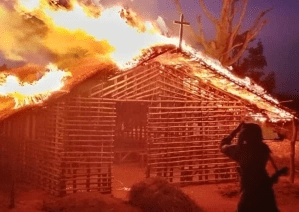
• 28th Sept- ISCAP terrorists captured and executed four Christians in Robinet village in Lubero district in North Kivu Province.
• 26th Sept– ISAP militants ambushed Christians between Oicha and Mamove area in Beni region.
• 23rd Sept- ISCAP militants led an armed assault on innocent civilians and Congolese troops in Maiba, Lubero district.
• 22nd Sept– ISCAP terrorists captured and executed three Christians in Mbau area of Beni region.
• 22nd Sept– ISCAP terrorists captured and executed three Christians in Mbau area of Beni region.
• 21st Sept- ISCAP terrorists conducted an attack on joint Congolese and Ugandan troops in Mangboko area or Beni region.
• 20th Sept- ISCAP terrorists captured and executed two Christians in Ofaye Otto Maber are in Ituri Province.
• 18th Sept- ISCAP terrorists conducted two attacks that targeted Christians in Mangboko area, Beni region.
• 18th Sept– ISCAP terrorists conducted an attack that targeted Christians in Mangboko area, Beni region.
• 17th Sept- ISCAP terrorists captured and executed two Christians near Mangboko area of Beni region.
• 15th Sept- ISCAP rebels clashed with allied Uganda-Congolese troops in Idohu region in Ituri.
• 15th Sept– ISCAP terrorists conducted an attack that targeted Christians in Mbau area, Beni region.
• 14th Sept- ISCAP militants ambushed Ugandan Army forces between Bandulu and Mabunda villages in Lubero district.
• 14th Sept– ISCAP terrorists captured and executed two Christians near Mbau area of Beni region.
• 13th Sept- ISCAP terrorists captured and executed one Christian near Mbau area of Beni region.
• 12th Sept– ISCAP terrorists captured and executed two Christians near Oicha area of Beni region.
• 08th Sept- ISCAP terrorists detonated an IED targeting Ugandan troops between Bandulu and Mabunda in Lubero district.
• 08th Sept- ISCAP terrorists conducted an attack on Christians in Bandulu in Lubero district in North Kivu.
• 08TH Sept- ISCAP terrorists captured and executed 18 Christians near Oicha in Beni Region.
• 08th Sept- ISCAP terrorists captured and executed three Christians near Oicha in Beni region.
• 08th Sept– ISCAP militants led an armed assault on Christians that led to the killing of over 100 in Ntoyo, Lubero District.
• 07th Sept– ISCAP terrorists captured and executed a spy in Bandulu, Lubero district.
• 06th Sept- ISCAP clashed with Congolese military in Bandulu, Lubero district.
SOMALIA
• 26TH Sept- ISS Militants ambushed Puntland Defense Forces in Bur Shankala, Balde valley in Puntland.
• 25th Sept- ISS terrorists clashed Puntland Defense Forces in Bur Shankala, Balde valley in Puntland.
• 23rd Sept- ISS militants detonated an IED killing Puntland Defense Forces Commander, General Ahmed Abdi Ali, in the blast between Dhasaan and Dhaadaar, Jalil Valley, Bari Region.
• 11th Sept- ISS militants detonated an IED targeting Puntland troops between Markadaan and Daray-Madobe, Jalil valley in Bari region.
• 11th Sept– ISS militants detonated an IED targeting Puntland troops between Gaatir Oodan and Daray-Madobe, Jalil valley in Bari region.
• 09th Sept- ISS militants detonated an IED targeting Puntland Defense forces between Shibab and Tadar in Puntland.
• 06th Sept- ISS militants detonated an IED targeting Puntland Defense forces nearValley in Bari Region.
• 05th Sept– ISS militants detonated two IEDs targeting Puntland Defense forces between Shibab and Tadar in Puntland.
• 02nd Sept– ISS terrorists ambushed Puntland Defense forces in Shinkali, Balade Valley in Bari region.
ANALYSIS AND INSIGHTS
MOZAMBIQUE
Islamic State Mozambique (ISM) intensified its operations in September 2025, marking one of the most active months in recent months across Cabo Delgado. The insurgency showed signs of renewed coordination, expanding its reach across seven districts and extending violence into neighboring Nampula province. What began as sporadic attacks early in the month developed into a pattern of deliberate assaults targeting civilians, Christian communities, and key population centers.
Throughout September, at least 28 incidents were reported, slightly higher than in August. Most of these were armed assaults, ambushes, and executions. Civilians bore the brunt of the violence, with small arms, machetes, and occasional grenades used in most attacks. Beheadings and targeted killings in Mocímboa da Praia’s Filipe Nyusi neighborhood revealed the group’s continued use of terror tactics to intimidate residents and erode community trust. The lack of advanced weapons suggests that ISM relies on mobility and local networks rather than heavy weaponry, making it a fluid but persistent threat.
The spatial spread of attacks demonstrated a significant shift in insurgent movement. While Cabo Delgado’s northern districts such as Macomia and Mocímboa da Praia remained hotspots, ISM extended operations west into Montepuez and Balama, and further south into Chiúre and Ancuabe. The most concerning development was the reported crossing into Nampula province, where villages in Memba and Erati districts were attacked. Schools and health centers were burned, and civilians were abducted, signaling the group’s intent to test new frontiers. These incursions underline ISM’s ability to exploit weak border control and under-governed areas, particularly near the Lúrio River.
Intelligence reports suggest that ISM movements followed the Messalo River corridor before spreading into the mining zones around Nairoto and Ntola. Montepuez and Balama, both rich in informal gold mining sites, offered the insurgents logistical benefits and potential revenue streams. Attacks in these areas displaced more than two thousand people, according to the International Organization for Migration. In Mocímboa da Praia, more than fifteen hundred people fled after two deadly assaults, including one where five civilians were killed in door-to-door attacks.
Government and allied responses during the month were centered in Macomia, where Mozambican and Rwandan troops launched joint operations in the Catupa forest area. Air reconnaissance and naval reinforcements were deployed, and fighting reportedly continued for several days. Despite these efforts, insurgents managed to carry out raids in multiple districts, suggesting that military pressure forced them to disperse rather than withdraw. In some urban areas, residents criticized the slow reaction of Rwandan forces, whose earlier reputation for effectiveness may be eroding.
The security setbacks also affected humanitarian operations. Doctors Without Borders suspended activities in Mocímboa da Praia after repeated attacks. The United Nations reported that only two-thirds of the people targeted for humanitarian aid in Cabo Delgado had been reached by midyear, with underfunding and insecurity restricting access.
At the political level, President Daniel Chapo’s recent comments hinting at possible dialogue with insurgent factions marked a subtle shift in tone. He acknowledged that while military operations continue, Mozambique might explore avenues for contact with insurgent leaders to understand their motivations. This statement comes as analysts note that purely military approaches have yet to deliver sustained security, especially in rural areas where state presence remains weak.
There are signs that ISM’s structure has evolved. Simultaneous attacks on three district headquarters between 22 and 28 September showed a degree of coordination unseen in earlier months. While the group continues to depend on light arms and local supply chains, the discovery of more than seven million US dollars in suspicious financial transactions linked to terrorist activity highlights the existence of informal support networks within Mozambique and across regional borders.
Recommendations
If current trends persist, the final quarter of 2025 may see continued insurgent pressure in southern Cabo Delgado and possible expansion along the Nampula coastal corridor. This trajectory could endanger reconstruction and natural gas investments near Palma and further complicate humanitarian access.
To counter these developments, several measures are advisable. First, authorities and partners should strengthen intelligence collection on insurgent logistics, particularly those linked to illegal mining and trade. Second, local early-warning systems should be supported to help civilians in remote areas detect threats and communicate quickly with security forces. Third, humanitarian agencies require secure corridors to resume aid delivery in contested districts. Fourth, community outreach should focus on bridging ethnic and religious divides that the insurgents exploit. Finally, cross-province coordination is essential to monitor insurgent movements into Nampula and prevent the conflict from spreading further south.
September’s events in Cabo Delgado confirm that while ISM lacks the capacity to hold territory, it has regained mobility and influence. Its southward reach, coupled with growing community mistrust, underscores the need for an integrated response that combines military, political, and humanitarian strategies.
D.R. CONGO
In September 2025, the Islamic State Central Africa Province (ISCAP), carried out a wave of attacks across North Kivu and Ituri provinces in eastern Democratic Republic of Congo. The month marked one of the most violent periods of the year, with over twenty reported incidents involving executions of civilians, ambushes on military patrols, and the use of improvised explosive devices. The insurgency, which remains one of the most persistent threats in the region, demonstrated both operational resilience and a capacity to sustain coordinated violence against multiple targets.
Most of the attacks were concentrated in Lubero district, particularly around Bandulu, Mabunda, and Ntoyo, as well as the Beni region, where areas such as Oicha, Mbau, and Mangboko continued to experience repeated assaults. In Ituri Province, activity was recorded in Idohu and Ofaye Otto Maber, where insurgents clashed with government and allied Ugandan forces. The concentration of attacks along the Bandulu–Mabunda and Oicha–Mangboko routes points to a deliberate effort to maintain control over key corridors used by civilians, security forces, and humanitarian convoys. These routes have long been strategic for both the insurgents and the military, serving as vital transit points between forested areas and major population centers.
Throughout the month, the ISCAP relied heavily on small arms for targeted executions and ambushes, while also employing improvised explosive devices against military convoys. The use of IEDs, though not widespread, illustrates the group’s ability to adapt and sustain asymmetric tactics despite ongoing military pressure. Most of the recorded incidents involved direct assaults on civilians, often motivated by religious identity, alongside ambushes on joint Congolese and Ugandan patrols. The most severe attack occurred in Ntoyo, where dozens of civilians were reportedly killed during an armed raid that underscored the insurgency’s capacity for high-impact violence.
The government and its partners maintained joint security operations during the month, including coordination between the Congolese Armed Forces (FARDC), Ugandan troops, and United Nations peacekeepers. However, these responses appeared largely reactive. Insurgent attacks frequently followed shortly after military movements, suggesting that the ISCAP continues to exploit intelligence gaps and mobility advantages in rural zones. There were no confirmed reports of large-scale offensives, airstrikes, or major arrests tied directly to September’s incidents, indicating that counterinsurgency operations remain limited in reach.
The humanitarian situation in affected areas remains dire. Recurrent attacks have led to population displacement, the destruction of livelihoods, and a growing climate of fear among rural communities. Villages near Oicha and Lubero have experienced repeated raids, forcing residents to abandon farmland and limiting access to local markets. The pattern of targeted executions, especially of Christians and suspected informants, reflects the group’s ongoing campaign to intimidate local populations and assert control through terror.
From a strategic perspective, the September incidents confirm that the ISCAP retains the ability to conduct sustained operations across multiple fronts. While there is no confirmed evidence of new external weapon supplies, the consistent use of IEDs and coordinated ambushes signals continued logistical support networks and local recruitment capacity. The group’s persistence in attacking both civilians and security forces shows that its intent remains to destabilize governance structures, hinder joint operations, and expand influence across border regions linking eastern Congo and western Uganda.
Recommendations
Looking ahead, the threat landscape in eastern DRC is expected to remain volatile. The insurgency is likely to continue using mobile bases and shifting attack patterns to evade security pressure, focusing on soft targets to project strength. Without improved intelligence coordination and stronger civilian protection mechanisms, the humanitarian toll could rise further in the coming months.
To strengthen regional stability, authorities and partners should invest in better intelligence collection on supply routes and insurgent logistics. Support for community-based early warning systems could improve local preparedness and response times during attacks. Humanitarian agencies should also plan for rapid displacement scenarios, ensuring access to aid and protection in high-risk districts. Closer coordination among Congolese, Ugandan, and UN forces is essential to create a more coherent approach to civilian protection and territorial control. Finally, systematic verification of incident data will help refine future assessments and inform policy decisions on security and humanitarian planning. Overall, the pattern of attacks in September 2025 underscores the ISCAP’s enduring adaptability and the need for sustained, coordinated, and community-centered responses to prevent further deterioration of security in eastern Congo.
SOMALIA
In September 2025, the Islamic State Somalia faction mounted a sharp escalation of violence in Puntland, concentrating its operations in the Bari region’s rugged valleys. Over the course of the month, eight attacks were recorded against the Puntland Defence Forces, marking one of the most active periods for the group in recent months. Most incidents took place along the Jalil and Balade valleys, areas known for their difficult terrain and limited government presence, where the militants relied on roadside bombs and ambushes to disrupt military patrols.
The pattern of violence suggests a deliberate shift in tactics. Six of the eight incidents involved improvised explosive devices planted along key movement corridors, particularly the routes between Shibab and Tadar, and between Markadaan and Daray-Madobe. These roads link isolated security outposts and are crucial for the transport of supplies and reinforcements. By targeting them, Islamic State Somalia aimed to restrict Puntland forces’ mobility and test their control over rural terrain.
A particularly significant incident occurred on September 23, when an IED detonated between Dhasaan and Dhaadaar in the Jalil Valley, killing General Ahmed Abdi Ali, a senior Puntland commander. The attack underscored the group’s growing precision and confidence, as it demonstrated the capability to strike high-value military targets. Later in the month, on September 25 and 26, militants ambushed Puntland troops in Bur Shankala, Balade Valley, leading to fierce clashes. These late-month ambushes appeared to build on earlier IED attacks, combining explosives with small arms fire to inflict greater casualties and destabilize local security control.
The geography of the attacks reveals a clear spatial concentration. The Jalil and Balade valleys, both situated in the Bari region, emerged as the epicenters of activity. Their narrow passes and limited infrastructure offer ideal cover for mobile insurgent units and make it difficult for Puntland forces to conduct large-scale operations. The repeated use of the same attack corridors suggests that the group maintains operational familiarity with these routes, possibly supported by local networks or temporary camps hidden in the surrounding hills.
These security challenges also carry humanitarian consequences. The increased use of roadside bombs threatens not only military convoys but also civilian vehicles and traders who rely on valley routes for daily transport. The fear of ambushes can restrict access to markets, delay humanitarian deliveries, and heighten the risk of displacement in communities already struggling with limited services. Even though the attacks were primarily directed at security forces, the proximity to populated areas means that civilians remain exposed to indirect harm.
There were no reports of major new counterterrorism operations in September, suggesting that Puntland forces were largely reacting to attacks rather than taking proactive measures. Earlier in the year, security campaigns had weakened the group’s larger formations, pushing them deeper into mountain areas. The resurgence of IED attacks during September may represent a tactical adaptation, allowing Islamic State Somalia to remain active despite limited manpower. By relying on small, coordinated cells and low-cost explosives, the group has managed to sustain pressure without engaging in conventional battles.
The death of General Ahmed Abdi Ali was a serious setback for Puntland’s defense leadership and may embolden the insurgents to pursue similar high-profile targets. The incident is likely to have disrupted local command structures, complicating efforts to mount coordinated responses in remote areas. For Puntland authorities, this underscores the challenge of balancing defensive measures with broader governance and stabilization efforts in rural communities.
Recommendations
From a strategic perspective, Islamic State Somalia’s operations in September highlight its resilience and adaptability. The concentration of attacks within a limited geographic area, coupled with the consistent use of explosives, indicates a steady command structure capable of maintaining logistical lines for bomb-making materials. While there is no indication of external support or significant territorial expansion, the insurgents have demonstrated a sustained ability to harass security forces and undermine regional stability.
If this pattern continues into the final quarter of 2025, Puntland may face an extended campaign of low-intensity attacks designed to weaken its security presence and erode public confidence. Addressing the threat will require a mix of security, intelligence, and community engagement measures. Improved monitoring of supply routes, better coordination between regional and federal forces, and stronger civilian reporting systems could all help limit the insurgents’ freedom of movement. Equally important is ensuring that humanitarian access remains open and that civilians in affected valleys receive timely support to prevent further displacement.
The events of September serve as a reminder that despite losing ground in parts of Somalia, the Islamic State faction remains a persistent danger. Its ability to regroup, adapt, and exploit the terrain in Puntland reflects a longer-term strategy aimed at outlasting government offensives rather than holding territory outright. Without sustained and coordinated responses, these small but frequent attacks could gradually evolve into a deeper challenge to Puntland’s stability and to broader security in northern Somalia.
CONCLUSION
September 2025 confirmed that Islamic State affiliates in East and Central Africa remain far from defeated. ISM’s renewed territorial reach in Mozambique, ISCAP’s sustained violence in the DRC, and ISS’s tactical resurgence in Somalia all point to coordinated resilience within the broader network. While none of the groups possess the strength to hold territory, their ability to sustain multi-front operations underscores enduring security gaps and limited state control in peripheral regions.
A durable response will require integrated strategies combining intelligence-driven military operations, reinforced community engagement, and enhanced cross-border coordination. Without a unified regional approach that pairs security with governance and humanitarian recovery, the Islamic State’s African affiliates will continue to exploit instability, prolonging insecurity across the continent’s eastern and central corridors.


