

EXECUTIVE SUMMARY
In August 2025, Islamic State affiliates in East and Central Africa sustained a high operational tempo across Somalia, Mozambique, and the Democratic Republic of Congo, underscoring their adaptability and regional reach. In Somalia, ISS mounted lethal ambushes and IED attacks in Puntland while facing intensified counterterrorism pressure from local forces, supported by U.S. and Emirati backing. The group’s resilience highlighted its continued ability to destabilize the Horn of Africa despite battlefield losses. In Mozambique, ISM expanded its footprint in Cabo Delgado, executing civilians, abducting fishermen, and raiding strategic districts, while leveraging propaganda to bolster recruitment and morale. The insurgents demonstrated mobility between districts and exploited weak state logistics, exposing structural vulnerabilities in the government response. In the DRC, ISCAP carried out some of the deadliest attacks of the year in North Kivu, including a massacre of 39 civilians in Bandulu, alongside systematic executions and raids in Ituri. These operations revealed a deliberate campaign to depopulate contested areas, weaken civilian resilience, and stretch regional security forces.
MOZAMBIQUE
- 27th Aug- ISM fighters passed through Chimbanga village south of Mocímboa da Praia, abducting two girls and looting property.
- 25th Aug – ISM militants killed four civilians and burned almost 30 buildings in Mapate village in Muidumbe district.
- 24th Aug- ISM Militants led an armed assault on Christians in Mapate area in Muidumbe District.
- 24th Aug- ISM and FADM clashed at Quihanhune Island near Quiterajo, with reports also indicating the seizure of explosives allegedly smuggled from Tanzania.
- 23rd Aug- ISM militants captured and executed three Christians in Huvlili in Palma district.
- 19th Aug- ISM fighters kidnapped at least 16 men from the Bilibiza lake fishing community in Quissanga district, demanding ransoms of 10,000 to 15,000 meticais.
- 19th Aug- ISM fighters were seen at Pangane, before moving onwards toward Quiterajo in a boat they hired at Mussemuco in the south of the district.
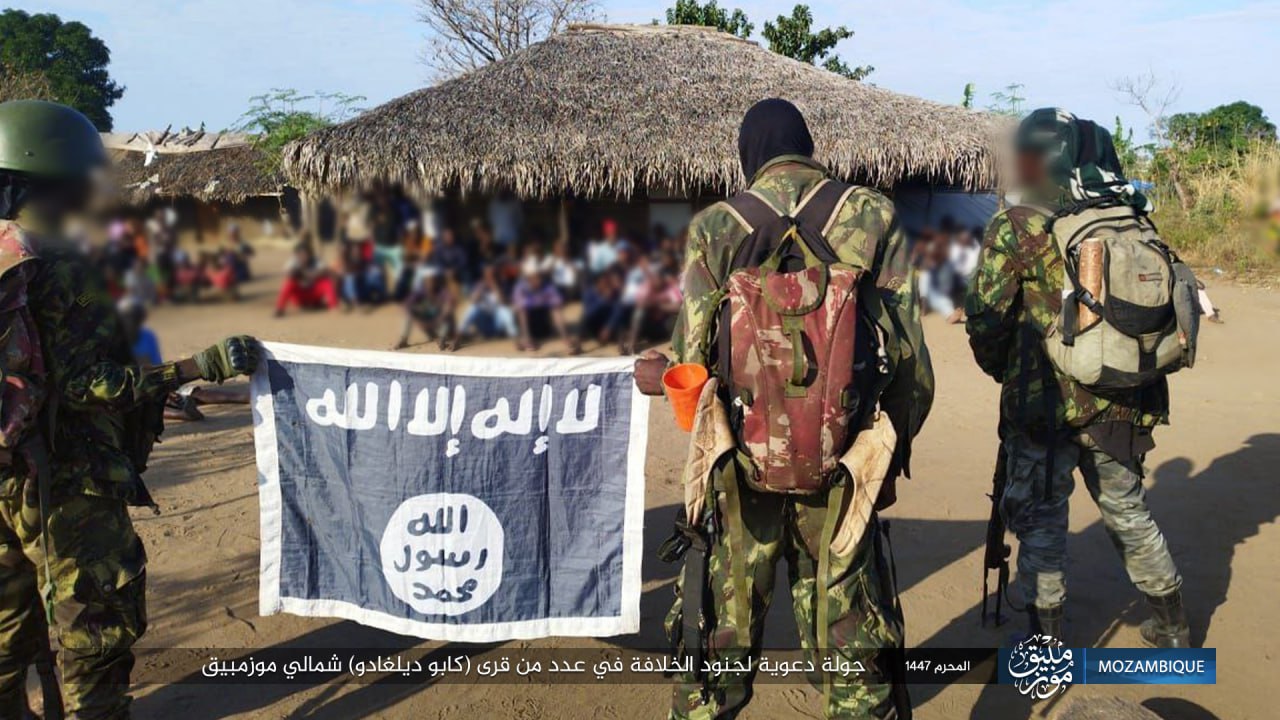
- 18th Aug- ISM released a photoset of fighters watching recently released propaganda videos “Noor Al-Jihad” and “Lions of the Coast.
- 16th Aug- ISM terrorists captured and executed two members of the Mozambican security forces on the R763 between Pundanhar and Palma in Palma district.
- 15th Aug- at least one person was captured and killed by ISM terrorists in Nambibi area in Metuge district.
- 15th Aug- ISM militants captured and executed two Christians in Miagalewa area in Muidumbe district.
- 13th Aug- two people were captured and killed by ISM militants in Marere in Mocimboa da Praia (MDP).
- 10th Aug- ISM militants captured and executed one Christian in Nakaramu in Ancuabe district.
- 07th Aug- ISM militants captured and executed a local militiaman in Nagomi area in Ancuabe district.
- 06th Aug- the house of a government backed militia leader was set ablaze by suspected ISM militants in Maputo area in Palma District.
- 05th Aug- FADM and Tanzanian forces shelling in Nangade forced ISM fighters to relocate and attack Maputo village, where they burned buildings and targeted a Local Force commander’s house.
- 03th Aug- ISM militants captured and executed a Christian in Magaia, Muidumbe district.
- 01st Aug- ISM militants captured and executed 4 Christians in Marea region in Chiure district.
- 01st Aug- ISM terrorists conducted an armed assault on Christians in Cinco area in Ciure district.

D.R. CONGO
- 27th Aug– ISCAP terrorists ambushed local militia forces in Bandulu village in Lubero District, North Kivu.
- 27th Aug- militants clashed with Ugandan Forces in Bandulu, Lubero District, North-Kivu Province.
- 27th Aug- militants captured and executed three christians between Bandulu and Manguredjipa, Lubero District.
- 26th Aug– ISCAP militants captured and executed a Christian in Oicha city in North Kivu.
- 26th Aug- In a separate incident in Oicha, North Kivu; ISCAP militants captured and executed two Christians.
- 26th Aug– ISCAP militants conducted and armed assault on UPDF and Congolese troops in Munjamba in Ituri province.
- 22nd Aug- ISCAP militants led an armed assault against Christians in Chape area in Ituri Province.
- 16th Aug- ISCAP militants conducted and armed assault against Christians in Oicha area in North Kivu.
- 15th Aug– ISCAP militants conducted and armed assault against Christians in Chape area in Ituri Province.
- 14th Aug– ISCAP militants led an armed assault on Christians, Killing 39, in Bandulu, Lubero District, North-Kivu.
- 13TH Aug- ISCAP terrorists captured and executed 8 Christians near Ombole village in Lubero District.
- 13th Aug- ISCAP militants led an armed assault on Christians in Mayi-Moya in Beni, North Kivu.
- 12th Aug- ISCAP militants captured and executed three Christians in Maiba village in Lubero District.
- 12th Aug- ISCAP militants captured and executed three Christians in Bandulu village in Lubero District.
- 10th Aug- ISCAP militants led and armed attack on Christians in Boga area in Ituri province.
- 09th Aug– ISCAP militants captured and executed four Christians in Kainama area in Beni District.
- 04th Aug– ISCAP militants captured and executed a Christian in Ofaye Otto Maber area in Ituri province.
SOMALIA
- 26th Aug- Puntland’s defense forces issued an urgent 72-hour ultimatum to ISS fighters trapped in the Baallade valley, urging them to surrender peacefully or face full military action.
- 22ND Aug- Between July 16 and August 22, ISS claimed responsibility for three attacks on Puntland Security Force positions in Somalia’s Bari region, reportedly killing 47 soldiers amid ongoing operations in the Cal-Miskaad mountains.
- 22nd Aug- Puntland security forces entered the areas of Yucrin and Maraagade following a planned operation in the mountainous region of Togga Baallade, part of the Calmiskaad range in Bari region.
- 22nd Aug- Islamic State Somalia (ISS) militants ambushed Puntland Defense Forces in the Balade Valley, Bari Region, Puntland.
- 05th Aug- ISS militants detonated an IED targeting Puntland Forces between Dhasaan and Dhaadaar in Jalil Valley in Bari region.
- 01st Aug- Puntland Forces and US Armed Forces conducted a counter-terrorism operation (CTO) detaining 3 ISS Militants in Humbeis, Sanaag in Puntland.
ANALYSIS AND SUMMARY
SOMALIA
In August 2025, Islamic State Somalia (ISS) came under heavy military pressure in Puntland, with Puntland Defense Forces issuing a rare 72-hour ultimatum to militants in the Baallade Valley while simultaneously conducting ground operations in the Cal Miskaad range. The group responded with a surge of attacks between July and late August, claiming responsibility for ambushes, IED strikes, and direct assaults that killed dozens of Puntland soldiers. Despite this show of resistance, ISS has been steadily losing ground as Puntland, backed by U.S. and Emirati support, has recaptured strongholds and carried out joint operations that disrupted militant networks. The U.S. Africa Command further escalated pressure with targeted airstrikes in Puntland, underscoring Washington’s concern about ISS’s resilience and its ability to maintain sanctuaries in rugged terrain.
At the same time, Washington broadened its campaign against ISS by offering a $10 million reward for information on its financiers, describing the Somalia branch as one of the most active ISIS affiliates in Africa and a key node in the global network. The group’s financing through extortion, piracy, illegal trade, and digital transfers highlights its integration into wider criminal economies, raising fears of cross-border plots, including potential operations in Kenya. While Somalia’s “total war” remains primarily directed against al-Shabaab, ISS’s capacity to ambush security forces, attract foreign fighters, and sustain funding streams means it continues to present a destabilizing second front in the Horn of Africa’s terrorism landscape.
MOZAMBIQUE
Islamic State Mozambique (ISM) demonstrated a sustained tempo of operations throughout August 2025, carrying out coordinated attacks across multiple districts in Cabo Delgado. The group maintained its pattern of targeting Christian civilians, government forces, and strategic routes, while complementing its battlefield activity with a sophisticated propaganda campaign. A series of brutal executions in Palma, Muidumbe, and Chiúre districts underlined the group’s reliance on violence to intimidate local populations, while the abduction of civilians in Quissanga highlighted ISM’s continued use of ransom as a source of funding. The southern push into Ancuabe and Chiúre was particularly alarming, not only for its proximity to major security force installations but also for its ability to expose structural weaknesses in the state’s response.
The insurgency’s mobility between northern and southern districts illustrates a deliberate strategy of stretching Mozambican and allied forces thin. ISM’s withdrawal from Chiúre back into Macomia and Quissanga was conducted without significant disruption, showing that security operations lacked the capacity to neutralize returning fighters. The group’s use of roadblocks along the N380, extorting money and abducting civilians, further emphasized its ability to disrupt economic activity and exert territorial control in contested zones. These tactics also reinforced its propaganda narrative of dominance, with incidents quickly amplified through Telegram channels and al-Naba.
ISM’s communications strategy gained new momentum under Suleimani Nguvu, the Tanzanian leader now directing propaganda efforts. The release of the “Light of Jihad” video, framed in local languages and cultural references, was designed to resonate with Mozambican audiences while embedding the insurgency within IS’s global jihadist discourse. By localizing messaging while maintaining a transnational ideological framework, ISM has positioned itself as both a domestic insurgency and a contributor to the broader Islamic State project. The group’s adept use of public Telegram channels to bypass restrictions suggests a refined approach to reaching targeted communities and sustaining recruitment pipelines.
The insurgency’s persistence in Palma, despite the presence of Rwandan and Mozambican forces near strategic LNG infrastructure, highlights the enduring vulnerabilities in Cabo Delgado. Unconfirmed claims of insurgents using children as human shields add a disturbing dimension to the conflict, though available evidence suggests child fighters are trained rather than deployed in that role. Overall, ISM’s August operations show that while state forces have localized tactical successes, the insurgency remains highly adaptive, exploiting weak logistics, overstretched deployments, and gaps in community trust. This dynamic ensures that ISM will remain a resilient threat in both the northern and southern reaches of Cabo Delgado.
D.R. CONGO
In August 2025, the Islamic State Central Africa Province (ISCAP) escalated its campaign of violence in eastern DRC, with North Kivu emerging as the epicenter of the crisis. The group carried out systematic attacks in Lubero, Beni, and Oicha, employing brutal tactics such as executions, abductions, and the destruction of civilian property. Bandulu village became a major hotspot, witnessing multiple incidents of mass killings and executions within a short timeframe. The attacks revealed a deliberate strategy to instill fear, depopulate contested areas, and weaken the resilience of local communities.
The violence in North Kivu was particularly severe in mid-August, where coordinated raids resulted in large-scale civilian casualties. The massacre in Bandulu on 14 August, where 39 Christians were killed, stands out as one of the most lethal assaults of the month. In addition to mass killings, ISCAP consistently targeted smaller groups of civilians, executing Christians in villages like Maiba, Kainama, and Ombole. This mix of large-scale assaults and targeted killings demonstrated a dual approach designed to both terrorize communities broadly and enforce ideological conformity through selective executions.
Ituri province, though less severely hit than North Kivu, continued to face destabilization through ambushes, raids, and armed assaults in places such as Boga, Chape, and Munjamba. ISCAP’s activities in Ituri disrupted humanitarian operations and compounded an already fragile situation, as displacement surged and essential services collapsed under mounting pressure. The pattern of violence in Ituri suggests that ISCAP is maintaining a secondary theater of operations, likely intended to stretch security forces and sustain a presence beyond its North Kivu strongholds.
The response from Congolese and Ugandan forces, while ongoing, has not been sufficient to halt the cycle of violence. Instead, offensives in remote areas often triggered retaliatory attacks against unprotected civilians, highlighting ISCAP’s ability to adapt and exploit security gaps. The continued displacement, food insecurity, and psychological trauma across affected areas underline the group’s success in eroding stability. August 2025 was therefore not only a month of heightened violence but also a period that exposed the limitations of regional and international counterinsurgency efforts against ISCAP in eastern Congo.
CONCLUSION
The events of August 2025 show that Islamic State branches in Somalia, Mozambique, and DRC remain entrenched, resilient, and adaptive, despite sustained counterterrorism operations. Each affiliate pursued a localized strategy but operated within a broader transnational framework of violence, propaganda, and intimidation. ISS’s ability to sustain attacks under heavy pressure, ISM’s exploitation of weak security coordination in Cabo Delgado, and ISCAP’s mass killings in eastern Congo all point to a persistent threat environment where state forces struggle to move beyond reactive containment. Without stronger regional coordination, improved community trust-building, and disruption of financial lifelines, these insurgencies are likely to endure and potentially expand, posing long-term challenges to stability in East and Central Africa.
The trajectory of Islamic State affiliates in East and Central Africa suggests that the coming months will see a continued pattern of localized insurgencies with transnational linkages. In Somalia, ISS’s loss of territorial ground will likely push it toward asymmetric operations such as IEDs and targeted assassinations, while its financing networks keep it relevant beyond Puntland. In Mozambique, ISM’s reach into southern districts signals intent to pressure security forces near strategic infrastructure, suggesting a protracted insurgency that could complicate LNG operations and undermine investor confidence. In the DRC, ISCAP’s reliance on mass killings and displacement points to an effort to consolidate territorial influence, a trend that risks further humanitarian crises and cross-border instability into Uganda.
These dynamics indicate that while state and allied forces may achieve tactical successes, the Islamic State’s regional branches remain structurally resilient. Their use of propaganda, mobility, and integration into illicit economies ensures sustainability even under pressure. Unless governments pair military responses with strategies that disrupt recruitment pipelines, improve civilian protection, and strengthen governance in contested areas, these groups are poised to maintain momentum and could potentially expand into new frontiers of instability across East and Central Africa.


