

The counter-terrorism landscape in East and Central Africa, particularly in Somalia, Mozambique, and the Democratic Republic of Congo (DRC), presents a complex and evolving challenge. In March 2024, Islamic State-affiliated groups, notably Islamic State Mozambique (ISM) and Islamic State Central Africa Province (ISCAP), continued their campaigns of violence and intimidation, demonstrating adaptability and resilience despite external pressures. In Mozambique, ISM’s leadership saw a significant transition with Saide Bossa emerging as a prominent figure, orchestrating a surge in militant activities across northeastern Mozambique. Meanwhile, financial challenges loom over ISCAP due to disruptions in funding networks originating from collapsed or weakened operations in Mozambique and Somalia. Against this backdrop, regional responses, including Algeria’s pledge to support local forces in Cabo Delgado and SADC’s commitment to conflict resolution in both Mozambique and the DRC, underscore the multifaceted efforts to address terrorism and promote stability in the region.
Mozambique
- 2nd Mar- Islamic State Mozambique insurgents entered Quissanga and Mussomero without resistance, attempted to ease the minds of residents by assuring they were just in the town to buy food. They however looted food from one trader before leaving.
- 3rd Mar- ISM militants Clashed with Militia Forces, in Ntutupue Village, Ancuabe District
- 3rd Mar- ISM insurgents walked to Quirimba island at low tide and beheaded at least three members of the defense and security forces.
- 04th Mar- five members of the security force were captured and later executed by the militants in Quirimba.
- 5th Mar- ISM militants attacked Ibo Island in Macomia district.
- 06th Mar- The insurgents operating in Chiúre returned north. On their way, they attacked the village of Pulo in Metuge district
- 06th Mar- IS claimed to have killed six people and burned 29 homes. IS social media also shared photos of a school building being set alight along with five dead bodies, two of whom had been beheaded.
- 09th Mar- Intelligence in Quissanga has revealed that the militants have been circulating in the area in an ambulance that was seized in a raid in Cabo Delgado.
DRC
- 29th Mar- ISCAP militants attacked civilians in Ndimo area in Ituri Province.
- 29th Mar- civilians were attacked after Insurgents mounted an armed assaults un Zunguluka region in Ituri.
- 28th Mar- ISCAP militants attacked civilians in Ndimo area in Ituri Province.
- 27th Mar- Several members of the armed forces were injured following an armed assault against them by ISCAP in Tenambo in North Kivu.
- 23rd Mar- at least 13 people were killed after ISCAP attacked the Christian village of Sayo in the Beni Region of North Kivu Province.
- 20th Mar- ISCAP militants led an armed assault on civilians between Bwakadi and Tshabi, Ituri Province.
- 19th Mar- 3 civilians were captured and beheaded by ISCAP terrorists in Masisi along the RN4 in North Kivu.
- 18th Mar- Armed militants led an armed assault on civilians in Masisi in North Kivu.
- 18th Mar- ISCAP insurgents led an armed assault on civilians in Tshabi area in Ituri.
- 17th Mar- militants led an armed assault on civilians in Mundubiena in North Kivu.
- 11th Mar- ISCAP terrorists led an armed assault on civilians and Congolese troops in Butala area in North Kivu.
- 09th Mar- suspected ISCAP militants led an armed assault on civilians in Malehe and Makunza areas of North Kivu.
- 10th Mar- three Christians were assassinated by ISCAP terrorists in in Mbutama village in Beni.
- 10th Mar- A Congolese army barrack was attacked by ISCAP in Mbutama village in Beni.
- 08th Mar- Militants Clashed with Congolese and Ugandan Armed Forces on foot patrols, in the Mayangosi Forest, along the Kasindi – Beni Road.
- 05th Mar- ISCAP terrorists led an armed assault on civilians and Congolese troops Komanda-Lina road in Ndalya, Ituri.
- 04th Mar- An ISCAP-led armed assault led to the capture and occupation of Nyazale village in North Kivu.
- 04th Mar- ISCAP terrorists led an armed assault on civilians in Vuhambya area in North Kivu.
- 01st Mar- ISCAP terrorists led an armed assault the Christian village of Mavivi along the RN4 in Ituri.
- 01st Mar- Militants Clashed with Congolese and Ugandan Armed Forces on foot patrols, in the Mayangosi Forest.
MOZAMBIQUE
NEW Leadership in ISM
Recent intelligence within the ranks of ISM in Mozambique have noted a significant leadership shift within the group. It has been reported that Saide Bossa, hailing from Mucojo, has emerged as the de facto leader. This transition coincides with a dramatic surge in militant activity across northeastern Mozambique since the beginning of 2024. Under Bossa’s leadership, ISIS-Mozambique appears to have adopted a more aggressive and strategic approach.
Bossa has been an active leadership in ISM’s leadership and has been credit for being a major recruiter for the group. Bossa’s documented approach to expansion, including the meticulous recording of seized items, reflects a structured and organized leadership style. This suggests that IS-M under Bossa’s command may possess a degree of administrative capability, enabling sustained operations and potentially further territorial gains.
Under Bossa’s leadership, IS Mozambique has orchestrated a surge in militant activities across Northeastern Mozambique, isolating Pemba and positioning themselves for further territorial expansion. The group has demonstrated innovative tactics and strategies, exploiting deficiencies within the Mozambican state and military.
On the other hand, Janfar Nurdine commands jihadist forces between Macomia and. He’s been seen coercing vehicle drivers, checking their religious knowledge, and extorting cash from them. Recently, he’s been pushing locals to adopt Islam and enforcing taxes on non-Muslims. While it’s unclear where he stands in the Islamic State’s hierarchy; His group resupplies through robberies, using civilians as porters. They camp in places like Nacoja and intercept vehicles, robbing passengers and sometimes kidnapping them. This has left locals living in fear, and security forces struggling to contain the threat.
Algeria pledges support for Local Force in Cabo Delgado
The Algerian government has pledged immediate support to Mozambique’s defense and security forces in the fight against Islamist terrorism in the northern province of Cabo Delgado. This support includes providing personalized equipment and assistance in information exchange to bolster counterterrorism efforts. Algeria has also committed to helping train Mozambican police forces to combat kidnapping gangs in major cities. This highlights a multifaceted approach to addressing security challenges beyond just military intervention.
Withdrawal of SAMIM:
The Southern African Development Community (SADC) mission in Mozambique, known as SAMIM, is set to withdraw from Cabo Delgado due to financial constraints. This decision was announced by Mozambique’s Minister of Foreign Affairs, Veronica Macamo, citing difficulties in funding the mission.
The decision to withdraw SAMIM is influenced by the perceived stability in Mozambique compared to the escalating violence in the Democratic Republic of Congo (DRC), where SADC also has a mission (SAMIDRC). The DRC situation, characterized by numerous armed groups and humanitarian crises, requires attention and resources from SADC member states.
Analysts express concerns that the departure of SAMIM could weaken the fight against terrorism in Cabo Delgado, providing terrorists with an opportunity to operate more freely. It is seen as a strategic error by some, as it may lead to an increase in terrorist activities and the emergence of new leaders within extremist groups.
Improved counter-terrorism training:
Despite the withdrawal of SAMIM, Mozambique’s Armed Defense Forces (FADM) have undergone operational training, including the 5th Rapid Reaction Forces (QRF) training cycle with the assistance of the European Union Training Mission in Mozambique (EUTM-MOZ). This aims to enhance their readiness and effectiveness in combating terrorism in Cabo Delgado.
Mozambican President Filipe Nyusi emphasizes that the withdrawal of SADC troops does not signify the end of the fight against terrorism in Cabo Delgado. He mentions efforts to establish bilateral cooperation with other countries to combat terrorism and underscores the importance of remaining united in addressing the security challenges.
D.R. CONGO
Financial Challenges for ISCAP due to collapse or weakened financial network in Mozambique and Somalia
The Islamic State Central Africa Province (ISCAP) has long relied on a network of Islamic State affiliates to finance its terror campaign in the Democratic Republic of the Congo (DRC) and Uganda. However, recent developments, including the collapse of IS operations in Mozambique and setbacks faced by al-Shabaab in Somalia, have raised questions about the reliability of ISCAP’s funding sources.
The collapse of IS operations in Mozambique and the weakened position of al-Shabaab in Somalia have likely disrupted ISCAP’s funding network. This suggests that ISCAP’s financial resources may be dwindling, making it more difficult for the group to sustain its activities. ISCAP has relied on a network of Islamic State affiliates in Africa, such as al-Shabaab, for funding. The closure of affiliated offices in Egypt, Libya, and Sudan has reduced contributions to ISCAP, highlighting the group’s dependence on external sources for funding.
The joint efforts of the Democratic Republic of the Congo (DRC) and Uganda under Operation Shujaa to confront ISCAP have likely increased pressure on the group. With the UN peacekeeping mission in the DRC ending in December 2024, there may be concerns about a potential escalation in ISCAP activity. Furthermore, regional cooperation among East and Southern African countries will be crucial in combating ISCAP’s funding and dismantling the group. This cooperation should prioritize tracking and closing ISCAP financial flows, as well as dismantling recruitment cells.
Overall intelligence predicts a challenging financial environment for ISCAP, potentially leading to operational setbacks and increased pressure from counterterrorism efforts. Regional cooperation and community development initiatives will be essential in addressing the root causes of extremism and countering ISCAP’s influence in affected areas.
Rwanda’s opposition of SADC peace mission in DRC
Rwanda has expressed significant reservations about the SAMIDRC, arguing that the force, in collaboration with the DRC army and coalition armed groups, may exacerbate the existing conflict. Rwanda’s opposition to the Southern African Development Community (SADC) Mission in the Democratic Republic of Congo (SAMIDRC) highlights deep-seated concerns regarding the regional response to conflict in the eastern DRC.
Despite SAMIDRC’s deployment aimed at addressing escalating conflicts, Rwanda contends that the involvement of southern African troops may exacerbate the situation. Accusations of Rwanda supporting rebel groups further strain relations with the DRC, complicating efforts for resolution. Rwanda’s appeal to the African Union (AU) underscores internal disagreements on conflict resolution strategies, raising questions about the AU’s effectiveness in mediating regional disputes. The situation reveals intricate coalition dynamics, potentially hindering SAMIDRC’s effectiveness and complicating efforts for lasting peace.
Beyond regional implications, the conflict’s humanitarian toll prompts international concern, potentially leading to intervention efforts. As SAMIDRC aims to restore peace and security in the eastern DRC, finding a balance between military actions and diplomatic initiatives is crucial in addressing underlying issues and fostering stability.
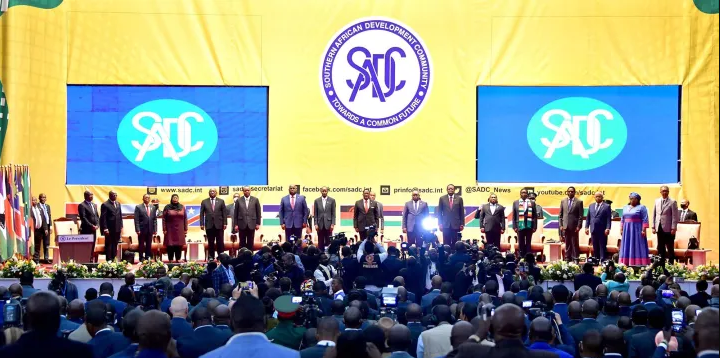
SADC MISSION IN DRC
SADC leaders, reaffirmed their commitment to resolving conflicts in the DRC and Mozambique, have emphasized the importance of providing both diplomatic and military support. This commitment was underscored during an extraordinary SADC summit in Lusaka, Zambia, chaired by President Hakainde Hichilema. The summit highlighted the region’s dedication to upholding the SADC mutual defense pact and commended troop-contributing countries for their efforts in preserving peace and security.
The deployment of SADC forces has led to notable gains in security and stability in conflict-affected areas of the DRC and Mozambique. Troops have played a crucial role in curbing insurgent activities and supporting affected governments, enhancing their legitimacy and governance capacity. However, challenges remain, including humanitarian concerns, the risk of escalation, financial burdens, and potential regional divisions. Despite these challenges, SADC’s comprehensive approach to conflict resolution, combining diplomatic and military efforts, reflects the region’s determination to promote lasting peace and development. Moving forward, continued cooperation, adaptive strategies, and prioritization of humanitarian needs will be essential in achieving sustainable peace and stability in the region.
Islamic State-affiliated groups in East and Central Africa, notably Islamic State Mozambique (ISM) and Islamic State Central Africa Province (ISCAP), continued their campaigns of violence and intimidation throughout March 2024. In Mozambique, ISM under the leadership of Saide Bossa intensified its activities, orchestrating attacks on various villages and security forces. The emergence of Bossa as a prominent figure within ISM signifies a shift in leadership dynamics, with potential implications for the group’s operational capabilities and strategic direction.
In the Democratic Republic of Congo (DRC), ISCAP militants carried out numerous attacks targeting civilians and security forces across different regions. However, ISCAP faces financial challenges due to disruptions in its funding networks originating from collapsed or weakened operations in Mozambique and Somalia. This financial strain may hinder ISCAP’s ability to sustain its activities and poses challenges for its long-term viability.
CONCLUSION
Regional responses to the threat of terrorism varied, with Algeria pledging support for local forces in Cabo Delgado, Mozambique, while the Southern African Development Community (SADC) mission in Mozambique announced its withdrawal due to financial constraints. Rwanda expressed reservations about the SADC peace mission in the DRC, highlighting underlying tensions and complexities in regional approaches to conflict resolution.
Despite these challenges, efforts to address terrorism in the region continue, with Mozambique’s Armed Defense Forces undergoing operational training and SADC leaders reaffirming their commitment to resolving conflicts in the DRC and Mozambique. The comprehensive approach combining diplomatic and military efforts underscores the region’s determination to promote lasting peace and stability.
In conclusion, the counter-terrorism landscape in East and Central Africa remains complex and evolving, with Islamic State-affiliated groups posing significant challenges to security and stability. Addressing the root causes of extremism, enhancing regional cooperation, and implementing effective counter-terrorism strategies will be crucial in mitigating the threat posed by these terrorist groups and fostering sustainable peace and development in the region.


