

Executive Summary
The Al-Qaeda affiliate militant group, Harakat al Shabaab al Mujahideen (HSM) commonly known as Al-Shabaab continue to escalate attacks in East Africa, especially in Kenya and Somalia.
In the first two weeks of June 2022, the Islamist militant group has escalated attacks against military positions, government officials as well targeting on civilians. Surge in Al-Shabaab has been noted especially in Somalia’s capital Mogadishu and localities in central and southern Somalia.
Notably, counterterrorism assets at Strategic Intelligence (S.I) have recorded at least 17 for Kenya and Somalia. Somalia the home-base of Al-Shabaab take the largest share of these attacks. Attack patterns in Somalia remains almost the same, mostly occurring in central and southern Somalia. Most these attacks are notably repeat attacks especially the ones targeted at Forward Operating Bases (FOBs) and military convoys.
Thus, threat posture continues to be skewed towards military operating bases and their patrols convoys besides military convoys on supply missions especially for Somalia. Most of the raids against the targets are notably ambushes and setting up of roadside IEDs with a number of repeat attacks being recorded. Assassination attempts on key officials also witnessed in Mogadishu and its environs as well as resumption of suicide operations.
The Al-Qaeda aligned Al-Shabaab militants still retains control over large swathes of rural Somalia and persistently mount attacks in urban centers a confirmation of the group’s resilient despite counter-operations on the group by coalition security operators and hurriedly claiming credit for the overly exaggerated operations for warfare purposes.
For Kenya, another key target of the Islamist Al-Shabaab, the militant group continue to stage low-scale attacks in an attempt to disrupt the calmness that has been witnessed for a number of months. The militant group is keen on disrupting the frontier counties (Mandera, Wajir, Garissa and Lamu) by emplacing IEDs on main roads and MSRs in an effort to target security assets on patrol missions.
AS Recently Claimed Attacks: June 1st – June 14th
- On June 1st, Emerging reports in Mogadishu indicate that Major Salad Ishaq Yusuf, a senior Somali government official, escaped unhurt in an IED explosion in Daynile district, killing at least one of his bodyguards and wounding five others. Al-Shabaab claimed responsibility for the attack, few hours after the attack.
- On June 1st, Al-Shabaab claimed to have detonated an IED targeting a Somali National Army (SNA) convoy in Mogadishu. The IED killed one soldier, wounded one other, and wounded two civilians as per local sources.
- On June 1st, heavily armed Al-Shabaab militants claimed to have attacked an AMISOM and Somali government base in Barire area of Lower Shabelle, but no casualties were reported.
- On June 2nd, A car bomb exploded in the general vicinity of Daynile, Mogadishu, killing at least two police officers and wounding several others. Al-Shabaab claimed responsibility for the targeted IED explosion through radio Andalus.
- On June 2nd, Al-Shabaab claimed responsibility for assassination of a Turkish Embassy staffer in Mogadishu. The staffer was also an electoral delegate.
- On June 2nd, Al-Shabaab claimed to have launched attacks against Kenyan security troops on the outskirts of Garissa town. Using light weapons, the militants claimed to have attacked Ura Madow camp and also ambushed the convoy was traveling from the military camp towards Bura, Tana River County.
- On June 6th, Al-Shabaab claimed to have detonated an improvised explosive device (IED) targeting a Kenyan police convoy and a lawmaker near Sangaliu, Garissa County, eastern Kenya. The targeted police convoy was traveling from Masalani, Tana River County, eastern Kenya, to Sangaliu, Garissa County. Local officials claimed the IED caused fatalities from the Critical Infrastructure Protection Unit.
- On June 6th, Al-Shabaab assassinated a Burundian African Union Transition Mission in Somalia (ATMIS) soldier in Balad, Middle Shabelle region, central Somalia.
- On June 6th, Al-Shabaab claims to have killed some Kenyan security officers, injured others following a roadside bomb attack on a police vehicle in Lamu county of Kenya.
- On June 9th, at least four Somali Soldiers have been injured after a vehicle they were travelling in was hit by an improvised explosive device (IED) outside the Somali capital, Mogadishu. Al-Shabaab claimed responsibility for the IED blast via its media.
- On June 9th, several explosions, believed to be mortar rounds, heard near Mogadishu airport amidst lockdown as the Somali capital hosted foreign delegations who attended the inauguration of new Somalia President Hassan Sheikh Mohamud.
- On June 9th, Al-Shabaab militants detonated an improvised explosive device (IED) targeting a US-trained Danab special forces convoy in Gululei, Bal’ad district, Middle Shabelle region, south-central Somalia. Al-Shabaab claimed the IED killed fifteen soldiers. The convoy was traveling from Mogadishu to Jowhar.
- On June 11th, Deadly clashes between Puntland security forces and Al-Shabaab militants reported in Bossaso. Corresponding local sources reported that two people were killed in the clashes in Bossaso, northern Somalia, one of them a security officer and the other a civilian.
- On June 12th, Al-Shabaab claimed a brief attempted probe on ATMIS military base operated by the Kenyan troops in Hosingow, Lower Juba. No details on casualties were provided.
- On June 12th, Al-Shabaab claimed responsibility for a direct attack on ATMIS-Ugandan operating base in Qoryoley, Lower Shabelle region of Somalia, but no casualties were reported.
- On June 13th, suspected Al-Shabaab assassins reportedly shot and killed a prominent elder outside his house in the morning in Mogadishu’s Bar-Ubah neighborhood. Warsame Ismail is said to have been approached by people armed with pistols, who fired several rounds at him before fleeing the scene.
- On June 14th, Al-Shabaab claimed the killing of two Burundian soldiers serving under ATMIS in the outskirt of Bala’d district in Somalia’s Middle Shabelle region. Notably, claimed that they have used snipers, according to the affiliate accounts of the group.

Latest Counterterrorism Operations
Also, counterterrorism operators, especially in the war-torn Somalia have been able to register a number of successful operations against the Al-Qaeda associated Al-Shabaab as follows;
- On June 1st, SNA troops reportedly cleared Tuulo Bawaaqo village from Al-Shabaab in Garbaharey district, Gedo region, southwestern Somalia. SNA sources claimed they killed at least four Al-Shabaab militants and wounded several others.
- On 1st, SNA troops cleared Booca town from Al-Shabaab militants in Bulo Burde district, Hiraan region, central Somalia. SNA officials claimed the troops killed two militants.
- On June 1st, Somali Danab special forces ambushed Al-Shabaab militants in Berhane, Kismayo district, Lower Jubba region, southern Somalia. Danab officials claimed they killed four militants and captured Mohamed Abdi Muqtaar, an Al-Shabaab officer.
- On June 3rd, Somali Danab forces cleared Al-Shabaab militants from Yaq Halul village, Kismayo district, Lower Jubba, southwestern Somalia. Security officials said Danab killed 11 Al-Shabaab militants and captured two AK47s and a PKM light machine gun.
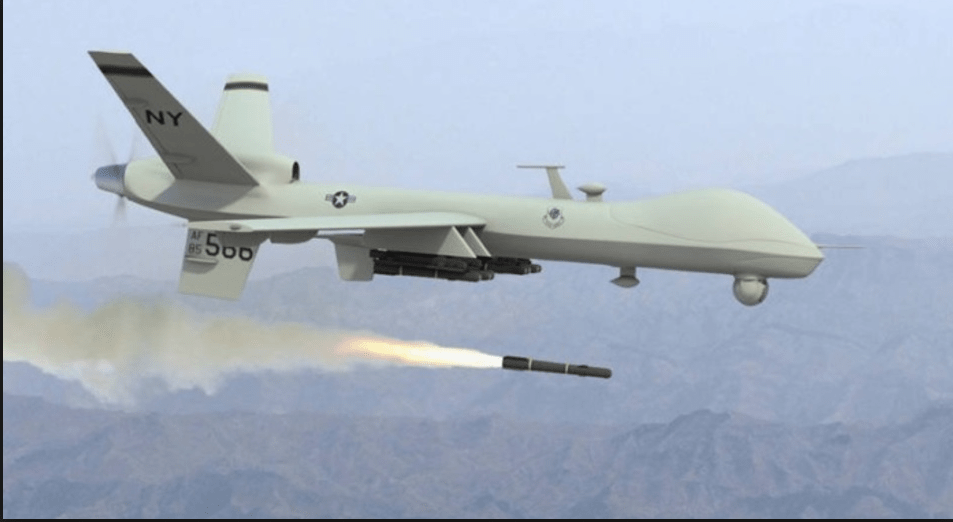
- On June 3rd, US Forces conducted a drone strike targeting Al-Shabaab militants near Beer Haani, Kismayo district, southwestern Somalia. The attack reportedly killed five Al-Shabaab militants and resulted in no civilian casualties.
- On June 4th, US-trained Danab special forces attacked Al-Shabaab bases near Toarorow and Aliyow Barow, Lower Shabelle region, Somalia. Danab destroyed Al-Shabaab operations bases and captured six Al-Shabaab operatives
- On June 6th, Somali National Intelligence and Security Agency (NISA) forces secured Busley Da’ud village in Qoryoley district, Lower Shabelle region, southern Somalia.
- On June 7th, Somali security forces closed roads in Mogadishu on in preparation for the June 9 presidential inauguration ceremony. The closed roads included; Maka al Mukarama, Military Hospital, Intersection Number Four, Sobe, Banadir Junction, and October 21.
- On June 8th, US-trained Danab special forces secured Yumbis and Nur Garre villages in Afgoye district, Lower Shabelle region, southern Somalia. Danab forces destroyed Al-Shabaab roadblocks and vehicles.
Assessments/Observations & Insights
Despite many years of sustained counterterrorism pressure, Somali forces supported by allied AMISOM partners and the U.S, the terrorist threat in East Africa is not degraded. The Al-Qaeda’s affiliated Al-Shabaab retains freedom of movement in many parts of southern Somalia and has demonstrated an ability and intent to strike outside of the country from low to large-scale attacks.
Notably, an average of at least one or two attacks are recorded from across the regions of Somalia. Regions mostly targeted in frequent attacks include the capital and the ones in central and southern Somalia where the militant group maintains quite some control. As for Kenya, retaliatory and disruptive incidents linked to Al-Shabaab are also being reported along the volatile border prefectures with Somalia especially; Mandera, Wajir, Garissa and Lamu. CT assets in those prefectures continue to be alert, reporting few cases on attempted probes and enemy signatures.
The trend and intent to strike on military and government besides its allies remains unchanged. The threat levels remain skewed towards Forward Operations Bases (FOBs) for both local and foreign troops. A number of operations have been recorded on FOBs and military convoys in the period under review.
Preferred attack types remain the use of IEDs, landmines and roadside bombs. Ambush raids are also gaining traction on the military targets. However, the Islamist militant group through its propaganda media channels, Al-Kataib and Radio Andalus has continually over exaggerated on the number of operations it has conducted in East Africa as well as number of fatalities/casualties caused.
Notably, rather than becoming weaker and less capable as a result of increased pressure from the United States and the ATMIS troops supporting the weak federal government forces, Al-Shabaab’s ability to plan and carry out complex operations against hardened targets remains intact. In fact, indications have emerged that Al-Shabaab is gaining new capabilities and tactics, with the latest being deployment of its snipers targeting ATMIS personnel. In latest claim, terror group targeted Burundi Army ATMIS continent at Bala’d Town outside the capital Mogadishu.
Conclusion

Its paramount that joint Counterterrorism (CT/COIN) not to relent on war against the Islamist Al-Shabaab group. An after-action review (AAR) on suspected Al-Shabaab camps in sub sectors of south and central Somalia also highly recommended. Strategic Intelligence (S.I) continue to track and monitor the Islamist militant’s activity in the East Africa regions and warns of consistent militant’s increased activity.
Continuous monitoring, surveillance and scouting encouraged several meters away from forward operating bases/police outpost for both Kenya and Somalia. Hard targets remain Al-Shabaab key targets. Change of routine on patrol teams as well as armies’ convoys also encouraged to avoid devastating IEDs/landmines that remains so common weapon of choice by the Al-Shabaab.
The militant group’s intentions to strike on hard targets (security forces) in Somalia and in Kenya remains the militant’s ultimate goal. Thus, joint CT and COIN operators should not relent on mounting concerted military pressuring against the Islamists groups in an effort defeat and annihilate them, besides to guard counter-terrorism gains so far made in the region.


